|
| "Did I ever tell you about my friend Lionel?" |
Arthur Conan Doyle
My friend, Lionel Dacre, lived in the Avenue de
Wagram, Paris. His house was that small one, with the iron railings and grass
plot in front of it, on the left-hand side as you pass down from the Arc de
Triomphe. I fancy that it had been there long before the avenue was
constructed, for the grey tiles were stained with lichens, and the walls were
mildewed and discoloured with age. It looked a small house from the street,
five windows in front, if I remember right, but it deepened into a single long
chamber at the back. It was here that Dacre had that singular library of occult
literature, and the fantastic curiosities which served as a hobby for himself,
and an amusement for his friends. A wealthy man of refined and eccentric
tastes, he had spent much of his life and fortune in gathering together what
was said to be a unique private collection of Talmudic, cabalistic, and magical
works, many of them of great rarity and value. His tastes leaned toward the
marvellous and the monstrous, and I have heard that his experiments in the
direction of the unknown have passed all the bounds of civilization and of
decorum. To his English friends he never alluded to such matters, and took the
tone of the student and virtuoso; but a Frenchman whose tastes were of the same
nature has assured me that the worst excesses of the black mass have been
perpetrated in that large and lofty hall, which is lined with the shelves of
his books, and the cases of his museum.
Dacre's appearance was enough to show that his deep
interest in these psychic matters was intellectual rather than spiritual. There
was no trace of asceticism upon his heavy face, but there was much mental force
in his huge, dome-like skull, which curved upward from amongst his thinning
locks, like a snowpeak above its fringe of fir trees. His knowledge was greater
than his wisdom, and his powers were far superior to his character. The small
bright eyes, buried deeply in his fleshy face, twinkled with intelligence and
an unabated curiosity of life, but they were the eyes of a sensualist and an
egotist. Enough of the man, for he is dead now, poor devil, dead at the very
time that he had made sure that he had at last discovered the elixir of life.
It is not with his complex character that I have to deal, but with the very
strange and inexplicable incident which had its rise in my visit to him in the
early spring of the year '82.
I had known Dacre in England, for my researches
in the Assyrian Room of the British Museum had been conducted at the time when
he was endeavouring to establish a mystic and esoteric meaning in the
Babylonian tablets, and this community of interests had brought us together.
Chance remarks had led to daily conversation, and that to something verging
upon friendship. I had promised him that on my next visit to Paris I would call
upon him. At the time when I was able to fulfil my compact I was living in a
cottage at Fontainebleau, and as the evening trains were inconvenient, he asked
me to spend the night in his house.
"I have only that one spare couch,"
said he, pointing to a broad sofa in his large salon; "I hope that you
will manage to be comfortable there."
It was a singular bedroom, with its high walls of
brown volumes, but there could be no more agreeable furniture to a bookworm
like myself, and there is no scent so pleasant to my nostrils as that faint,
subtle reek which comes from an ancient book. I assured him that I could desire
no more charming chamber, and no more congenial surroundings.
"If the fittings are neither convenient nor
conventional, they are at least costly," said he, looking round at his
shelves. "I have expended nearly a quarter of a million of money upon
these objects which surround you. Books, weapons, gems, carvings, tapestries,
images—there is hardly a thing here which has not its history, and it is
generally one worth telling."
He was seated as he spoke at one side of the open
fire-place, and I at the other. His reading-table was on his right, and the
strong lamp above it ringed it with a very vivid circle of golden light. A
half-rolled palimpsest lay in the centre, and around it were many quaint
articles of bric-a-brac. One of these was a large funnel, such as is used for
filling wine casks. It appeared to be made of black wood, and to be rimmed with
discoloured brass.
"That is a curious thing," I remarked.
"What is the history of that?"
"Ah!" said he, "it is the very
question which I have had occasion to ask myself. I would give a good deal to
know. Take it in your hands and examine it."
I did so, and found that what I had imagined to
be wood was in reality leather, though age had dried it into an extreme
hardness. It was a large funnel, and might hold a quart when full. The brass
rim encircled the wide end, but the narrow was also tipped with metal.
"What do you make of it?" asked Dacre.
"I should imagine that it belonged to some
vintner or maltster in the Middle Ages," said I. "I have seen in
England leathern drinking flagons of the seventeenth century—'black jacks' as
they were called—which were of the same colour and hardness as this
filler."
"I dare say the date would be about the
same," said Dacre, "and, no doubt, also, it was used for filling a
vessel with liquid. If my suspicions are correct, however, it was a queer
vintner who used it, and a very singular cask which was filled. Do you observe
nothing strange at the spout end of the funnel."
As I held it to the light I observed that at a
spot some five inches above the brass tip the narrow neck of the leather funnel
was all haggled and scored, as if someone had notched it round with a blunt
knife. Only at that point was there any roughening of the dead black surface.
"Someone has tried to cut off the
neck."
"Would you call it a cut?"
"It is torn and lacerated. It must have
taken some strength to leave these marks on such tough material, whatever the
instrument may have been. But what do you think of it? I can tell that you know
more than you say."
Dacre smiled, and his little eyes twinkled with
knowledge.
"Have you included the psychology of dreams
among your learned studies?" he asked.
"I did not even know that there was such a
psychology."
"My dear sir, that shelf above the gem case
is filled with volumes, from Albertus Magnus onward, which deal with no other
subject. It is a science in itself."
"A science of charlatans!"
"The charlatan is always the pioneer. From
the astrologer came the astronomer, from the alchemist the chemist, from the
mesmerist the experimental psychologist. The quack of yesterday is the
professor of tomorrow. Even such subtle and elusive things as dreams will in
time be reduced to system and order. When that time comes the researches of our
friends on the bookshelf yonder will no longer be the amusement of the mystic,
but the foundations of a science."
"Supposing that is so, what has the science
of dreams to do with a large, black, brass-rimmed funnel?"
"I will tell you. You know that I have an
agent who is always on the look-out for rarities and curiosities for my
collection. Some days ago he heard of a dealer upon one of the Quais who had
acquired some old rubbish found in a cupboard in an ancient house at the back
of the Rue Mathurin, in the Quartier Latin. The dining-room of this old house
is decorated with a coat of arms, chevrons, and bars rouge upon a field argent,
which prove, upon inquiry, to be the shield of Nicholas de la Reynie, a high
official of King Louis XIV. There can be no doubt that the other articles in
the cupboard date back to the early days of that king. The inference is,
therefore, that they were all the property of this Nicholas de la Reynie, who
was, as I understand, the gentleman specially concerned with the maintenance
and execution of the Draconic laws of that epoch."
"What then?"
"I would ask you now to take the funnel into
your hands once more and to examine the upper brass rim. Can you make out any
lettering upon it?"
There were certainly some scratches upon it,
almost obliterated by time. The general effect was of several letters, the last
of which bore some resemblance to a B.
"You make it a B?"
"Yes, I do."
"So do I. In fact, I have no doubt whatever
that it is a B."
"But the nobleman you mentioned would have
had R for his initial."
"Exactly! That's the beauty of it. He owned
this curious object, and yet he had someone else's initials upon it. Why did he
do this?"
"I can't imagine; can you?"
"Well, I might, perhaps, guess. Do you
observe something drawn a little farther along the rim?"
"I should say it was a crown."
"It is undoubtedly a crown; but if you
examine it in a good light, you will convince yourself that it is not an
ordinary crown. It is a heraldic crown—a badge of rank, and it consists of an
alternation of four pearls and strawberry leaves, the proper badge of a
marquis. We may infer, therefore, that the person whose initials end in B was
entitled to wear that coronet."
"Then this common leather filler belonged to
a marquis?"
Dacre gave a peculiar smile.
"Or to some member of the family of a
marquis," said he. "So much we have clearly gathered from this
engraved rim."
"But what has all this to do with dreams?"
I do not know whether it was from a look upon Dacre's face, or from some subtle
suggestion in his manner, but a feeling of repulsion, of unreasoning horror,
came upon me as I looked at the gnarled old lump of leather.
"I have more than once received important
information through my dreams," said my companion in the didactic manner
which he loved to affect. "I make it a rule now when I am in doubt upon
any material point to place the article in question beside me as I sleep, and
to hope for some enlightenment. The process does not appear to me to be very
obscure, though it has not yet received the blessing of orthodox science.
According to my theory, any object which has been intimately associated with
any supreme paroxysm of human emotion, whether it be joy or pain, will retain a
certain atmosphere or association which it is capable of communicating to a
sensitive mind. By a sensitive mind I do not mean an abnormal one, but such a
trained and educated mind as you or I possess."
"You mean, for example, that if I slept
beside that old sword upon the wall, I might dream of some bloody incident in
which that very sword took part?"
"An excellent example, for, as a matter of
fact, that sword was used in that fashion by me, and I saw in my sleep the
death of its owner, who perished in a brisk skirmish, which I have been unable
to identify, but which occurred at the time of the wars of the Frondists. If
you think of it, some of our popular observances show that the fact has already
been recognized by our ancestors, although we, in our wisdom, have classed it
among superstitions."
"For example?"
 |
| "The bride's cake...???" |
"Well, the placing of the bride's cake beneath the pillow in order that the sleeper may have pleasant dreams. That is one of several instances which you will find set forth in a small brochure which I am myself writing upon the subject. But to come back to the point, I slept one night with this funnel beside me, and I had a dream which certainly throws a curious light upon its use and origin."
"What did you dream?"
"I dreamed——" He paused, and an intent
look of interest came over his massive face. "By Jove, that's well thought
of," said he. "This really will be an exceedingly interesting
experiment. You are yourself a psychic subject—with nerves which respond
readily to any impression."
"I have never tested myself in that
direction."
"Then we shall test you tonight. Might I ask
you as a very great favour, when you occupy that couch tonight, to sleep with
this old funnel placed by the side of your pillow?"
The request seemed to me a grotesque one; but I
have myself, in my complex nature, a hunger after all which is bizarre and
fantastic. I had not the faintest belief in Dacre's theory, nor any hopes for
success in such an experiment; yet it amused me that the experiment should be
made. Dacre, with great gravity, drew a small stand to the head of my settee,
and placed the funnel upon it. Then, after a short conversation, he wished me
good night and left me.
Three men in black, with curious, top-heavy,
black velvet hats, sat in a line upon a red-carpeted dais. Their faces were
very solemn and sad. On the left stood two long-gowned men with port-folios in
their hands, which seemed to be stuffed with papers. Upon the right, looking
toward me, was a small woman with blonde hair and singular, light-blue eyes—the
eyes of a child. She was past her first youth, but could not yet be called middle-aged.
Her figure was inclined to stoutness and her bearing was proud and confident.
Her face was pale, but serene. It was a curious face, comely and yet feline,
with a subtle suggestion of cruelty about the straight, strong little mouth and
chubby jaw. She was draped in some sort of loose, white gown. Beside her stood
a thin, eager priest, who whispered in her ear, and continually raised a
crucifix before her eyes. She turned her head and looked fixedly past the
crucifix at the three men in black, who were, I felt, her judges.
As I gazed the three men stood up and said
something, but I could distinguish no words, though I was aware that it was the
central one who was speaking. They then swept out of the room, followed by the
two men with the papers. At the same instant several rough-looking fellows in
stout jerkins came bustling in and removed first the red carpet, and then the
boards which formed the dais, so as to entirely clear the room. When this
screen was removed I saw some singular articles of furniture behind it. One
looked like a bed with wooden rollers at each end, and a winch handle to
regulate its length. Another was a wooden horse. There were several other
curious objects, and a number of swinging cords which played over pulleys. It
was not unlike a modern gymnasium.
When the room had been cleared there appeared a
new figure upon the scene. This was a tall, thin person clad in black, with a
gaunt and austere face. The aspect of the man made me shudder. His clothes were
all shining with grease and mottled with stains. He bore himself with a slow
and impressive dignity, as if he took command of all things from the instant of
his entrance. In spite of his rude appearance and sordid dress, it was now his
business, his room, his to command. He carried a coil of light ropes over his
left forearm. The lady looked him up and down with a searching glance, but her
expression was unchanged. It was confident—even defiant. But it was very
different with the priest. His face was ghastly white, and I saw the moisture
glisten and run on his high, sloping forehead. He threw up his hands in prayer
and he stooped continually to mutter frantic words in the lady's ear.
The man in black now advanced, and taking one of
the cords from his left arm, he bound the woman's hands together. She held them
meekly toward him as he did so. Then he took her arm with a rough grip and led
her toward the wooden horse, which was little higher than her waist. On to this
she was lifted and laid, with her back upon it, and her face to the ceiling,
while the priest, quivering with horror, had rushed out of the room. The
woman's lips were moving rapidly, and though I could hear nothing I knew that
she was praying. Her feet hung down on either side of the horse, and I saw that
the rough varlets in attendance had fastened cords to her ankles and secured
the other ends to iron rings in the stone floor.
 |
| "Great Scott, Holmes!!!" |
My heart sank within me as I saw these ominous preparations, and yet I was held by the fascination of horror, and I could not take my eyes from the strange spectacle. A man had entered the room with a bucket of water in either hand. Another followed with a third bucket. They were laid beside the wooden horse. The second man had a wooden dipper—a bowl with a straight handle—in his other hand. This he gave to the man in black. At the same moment one of the varlets approached with a dark object in his hand, which even in my dream filled me with a vague feeling of familiarity. It was a leathern filler. With horrible energy he thrust it—but I could stand no more. My hair stood on end with horror. I writhed, I struggled, I broke through the bonds of sleep, and I burst with a shriek into my own life, and found myself lying shivering with terror in the huge library, with the moonlight flooding through the window and throwing strange silver and black traceries upon the opposite wall. Oh, what a blessed relief to feel that I was back in the nineteenth century—back out of that mediaeval vault into a world where men had human hearts within their bosoms. I sat up on my couch, trembling in every limb, my mind divided between thankfulness and horror. To think that such things were ever done—that they could be done without God striking the villains dead. Was it all a fantasy, or did it really stand for something which had happened in the black, cruel days of the world's history? I sank my throbbing head upon my shaking hands. And then, suddenly, my heart seemed to stand still in my bosom, and I could not even scream, so great was my terror. Something was advancing toward me through the darkness of the room.
It is a horror coming upon a horror which breaks
a man's spirit. I could not reason, I could not pray; I could only sit like a
frozen image, and glare at the dark figure which was coming down the great
room. And then it moved out into the white lane of moonlight, and I breathed
once more. It was Dacre, and his face showed that he was as frightened as
myself.
"Was that you? For God's sake what's the
matter?" he asked in a husky voice.
"Oh, Dacre, I am glad to see you! I have
been down into hell. It was dreadful."
"Then it was you who screamed?"
"I dare say it was."
"It rang through the house. The servants are
all terrified." He struck a match and lit the lamp. "I think we may
get the fire to burn up again," he added, throwing some logs upon the
embers. "Good God, my dear chap, how white you are! You look as if you had
seen a ghost."
"So I have—several ghosts."
"The leather funnel has acted, then?"
"I wouldn't sleep near the infernal thing
again for all the money you could offer me."
Dacre chuckled.
"I expected that you would have a lively
night of it," said he. "You took it out of me in return, for that
scream of yours wasn't a very pleasant sound at two in the morning. I suppose
from what you say that you have seen the whole dreadful business."
"What dreadful business?"
"The torture of the water—the 'Extraordinary
Question,' as it was called in the genial days of 'Le Roi Soleil.' Did you
stand it out to the end?"
"No, thank God, I awoke before it really
began."
"Ah! it is just as well for you. I held out
till the third bucket. Well, it is an old story, and they are all in their
graves now, anyhow, so what does it matter how they got there? I suppose that
you have no idea what it was that you have seen?"
"The torture of some criminal. She must have
been a terrible malefactor indeed if her crimes are in proportion to her
penalty."
"Well, we have that small consolation,"
said Dacre, wrapping his dressing-gown round him and crouching closer to the
fire. "They WERE in proportion to her penalty. That is to say, if I am
correct in the lady's identity."
"How could you possibly know her
identity?"
For answer Dacre took down an old vellum-covered
volume from the shelf.
"Just listen to this," said he;
"it is in the French of the seventeenth century, but I will give a rough
translation as I go. You will judge for yourself whether I have solved the
riddle or not.
"'The prisoner was brought before the Grand
Chambers and Tournelles of Parliament, sitting as a court of justice, charged
with the murder of Master Dreux d'Aubray, her father, and of her two brothers,
MM. d'Aubray, one being civil lieutenant, and the other a counsellor of
Parliament. In person it seemed hard to believe that she had really done such
wicked deeds, for she was of a mild appearance, and of short stature, with a
fair skin and blue eyes. Yet the Court, having found her guilty, condemned her
to the ordinary and to the extraordinary question in order that she might be
forced to name her accomplices, after which she should be carried in a cart to
the Place de Greve, there to have her head cut off, her body being afterwards
burned and her ashes scattered to the winds.'
"The date of this entry is July 16,
1676."
"It is interesting," said I, "but
not convincing. How do you prove the two women to be the same?"
"I am coming to that. The narrative goes on
to tell of the woman's behaviour when questioned. 'When the executioner
approached her she recognized him by the cords which he held in his hands, and
she at once held out her own hands to him, looking at him from head to foot
without uttering a word.' How's that?"
"Yes, it was so."
"'She gazed without wincing upon the wooden
horse and rings which had twisted so many limbs and caused so many shrieks of
agony. When her eyes fell upon the three pails of water, which were all ready
for her, she said with a smile, "All that water must have been brought
here for the purpose of drowning me, Monsieur. You have no idea, I trust, of
making a person of my small stature swallow it all."' Shall I read the
details of the torture?"
"No, for Heaven's sake, don't."
"Here is a sentence which must surely show
you that what is here recorded is the very scene which you have gazed upon
tonight: 'The good Abbe Pirot, unable to contemplate the agonies which were
suffered by his penitent, had hurried from the room.' Does that convince
you?"
"It does entirely. There can be no question
that it is indeed the same event. But who, then, is this lady whose appearance
was so attractive and whose end was so horrible?"
For answer Dacre came across to me, and placed
the small lamp upon the table which stood by my bed. Lifting up the ill-omened
filler, he turned the brass rim so that the light fell full upon it. Seen in
this way the engraving seemed clearer than on the night before.
 |
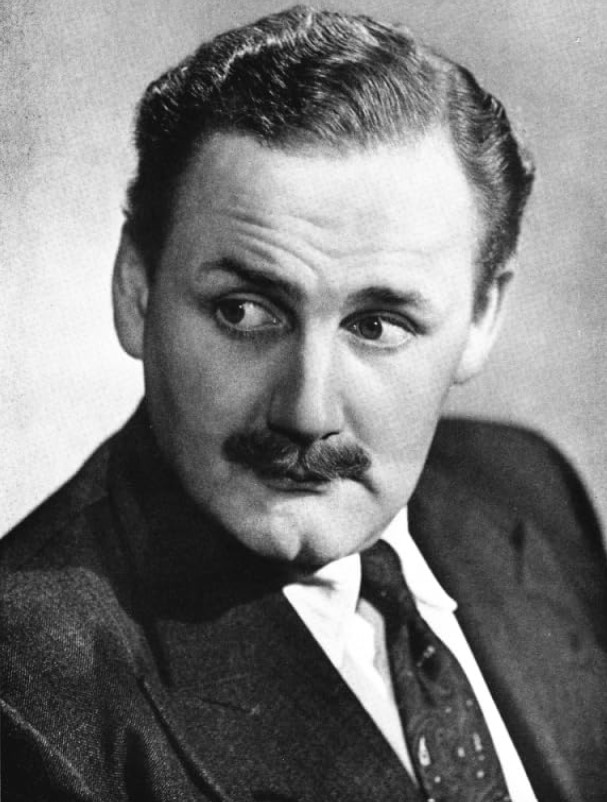
| Sir Arthur Conan Doyle. |
"We have already agreed that this is the badge of a marquis or of a marquise," said he. "We have also settled that the last letter is B."
"It is undoubtedly so."
"I now suggest to you that the other letters
from left to right are, M, M, a small d, A, a small d, and then the final
B."
"Yes, I am sure that you are right. I can
make out the two small d's quite plainly."
"What I have read to you tonight," said
Dacre, "is the official record of the trial of Marie Madeleine d'Aubray,
Marquise de Brinvilliers, one of the most famous poisoners and murderers of all
time."
I sat in silence, overwhelmed at the
extraordinary nature of the incident, and at the completeness of the proof with
which Dacre had exposed its real meaning. In a vague way I remembered some
details of the woman's career, her unbridled debauchery, the cold-blooded and
protracted torture of her sick father, the murder of her brothers for motives
of petty gain. I recollected also that the bravery of her end had done
something to atone for the horror of her life, and that all Paris had
sympathized with her last moments, and blessed her as a martyr within a few
days of the time when they had cursed her as a murderess. One objection, and
one only, occurred to my mind.
"How came her initials and her badge of rank
upon the filler? Surely they did not carry their mediaeval homage to the
nobility to the point of decorating instruments of torture with their
titles?"
"I was puzzled with the same point,"
said Dacre, "but it admits of a simple explanation. The case excited
extraordinary interest at the time, and nothing could be more natural than that
La Reynie, the head of the police, should retain this filler as a grim
souvenir. It was not often that a marchioness of France underwent the
extraordinary question. That he should engrave her initials upon it for the
information of others was surely a very ordinary proceeding upon his
part."
"And this?" I asked, pointing to the
marks upon the leathern neck.
"She was a cruel tigress," said Dacre,
as he turned away. "I think it is evident that like other tigresses her
teeth were both strong and sharp."
END
Louis Shalako has books and stories on GooglePlay.
See his works on Fine Art America.
See this free audiobook here. One Million Words of Crap.
More on Sir Arthur Conan Doyle.
Thank you for reading, and listening.