Showing posts with label Opinion. Show all posts

Tuesday, July 23, 2024

Dig Deep: An Analysis of Local Media, Sarnia-Lambton. Louis Shalako.

Vote for me, I have my own newspaper...


Louis Shalako


Consider the current state of mass media in Canada.

Let us focus primarily on the journalism aspects of local media and make a review, some analysis of local media here in Sarnia-Lambton.

It’s also something of a tough assignment. We’re not here to insult local personalities or to put down local companies, (Don’t worry, he’ll get to it. – ed), all of which employ people and contribute to the local economy. They make other contributions as well, some of which are intangibles.

As readers, they’ve been part of our lives for a very long time…

Basically, some of the effects are difficult to measure or quantify, but one might agree that they exist. Simply put, the local marketplace is served, and to determine how well it is served might lie mostly in the eye, (or ears, or mind), of the individual reader, viewer or listener.

What do we actually expect, from local media.

***

Okay, in we go—

Corus Entertainment, owners of Global News, and television and radio outlets across Canada, is laying off workers, cutting costs, and have seen their share prices fall from twenty-five dollars or so, down to twelve cents.

I won’t get too deeply into that, but some of those stations are considered local stations.

We will go through systematically, examine print, online, radio, television (of which there are no stations except possibly TV-6, public access TV with extremely limited funding and minimal content).

The Sarnia Observer.

One wonders if the local daily generates much of a profit for the Postmedia Group, or whether it breaks even, or operates at a loss. What strikes me with some of the long-standing, more traditional news outlets is the insistence on having a print edition. Ink, paper, and time on the press, the labour, it all costs money. Printing requires physical infrastructure. In the past, the Observer shut down their own printing plant, and it was announced that the paper would be printed, to my recollection, at the London Free Press plant in London.

The papers would be trucked into town, with distribution from their own loading dock in downtown Sarnia. My mother and step-father actually took a couple of rural paper routes, showing up a seven a.m., six days a week, and they kept that up until one or the other got back to more renumerative work. Ron is a licensed auto body mechanic, and Shirley has worked in taxes, financial planning, teaching, all kinds of things. As retirement age creeps up on me, I have considered it myself. I suppose I’d rather write for the news as opposed to tossing bagged copies out at the end of people’s driveways. I have to admit, grabbing a stack of papers and then cruising the side-roads might be an all right way to eke out some rather small pension benefits…I could look at the birds, the trees and the grass, and listen to the radio, and enjoy a coffee and presumably, a pay-cheque.

Sarnia Observer Scales Back Print Edition. (Sarnia News Today)

That being said, what do you do if the thing really isn’t making money? The parent company can only afford to subsidize any one local operation for so long, and in the current environment, they might have quite a number of them on hand. This can only go on for so long, as we see from the lead example, the Corus/Global TV story.

In the classic sense, subscriptions paid for paper and ink, and advertising was considered to pay for the editorial staff—writers, photographers, graphic artists and editors. One must assume the combination of all revenue streams provided some level of profit.
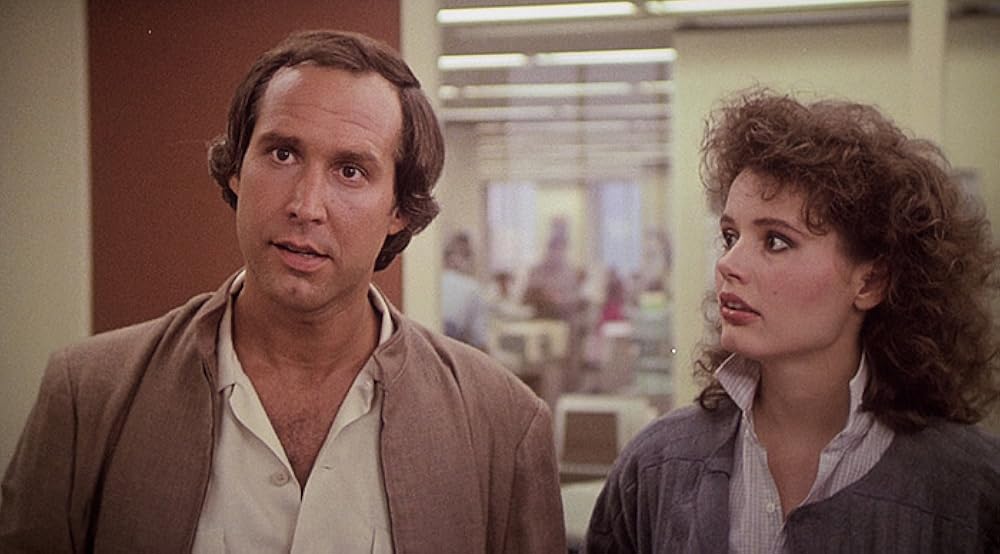
So, you want my story now, basically... #Fletch (Click any image to enlarge.)


The Sarnia Journal.

The Sarnia Journal recently won an award for a series of stories on homelessness locally. They have won awards in the past. It’s almost like they make a point of it—all it takes is a good, deep look into an issue of local importance, one with regional relevance. The story or series has to be submitted to the Association, who give such awards once a year.

It is (was) a weekly, and after a publishing hiatus brought on by the Covid-19 pandemic and related economic factors, have brought back the print edition. The online version seems quite good, yet one wonders at pricing in terms of the ads. A print edition, going out to 14,000 households or so, still carries a lot of weight with advertisers. Simply counting clicks isn’t quite the same thing, or maybe there are other factors as well. Originally, media outlets realized they must have an online presence, and yet the persistent mentality was to focus on their print editions, the online material being something of a must-have, but also an afterthought.

Announcement from Sarnia Journal regarding Distribution.

What is a local issue with regional relevance? Well, homelessness for one—it struck me one day, when the provincial government provided a couple of million dollars on the homelessness file, (and it was in the ‘paper’), to go looking at other publications, big and small, all across Ontario. There are thousands of municipalities, counties, regions, and they were all getting money in dribs and drabs, some quite small amounts, in the larger centres, quite large amounts. That series of stories had regional, provincial, national relevance. And no one had ever thought to go through, systematically, and tally all of that money up. Or to draw conclusions from that data, or offer any sort of editorial opinion. It’s not like they can afford to go on data-fishing expeditions, just for the sport of it.

The quality of journalism depends on the quality of the questions asked…and having the resources to pursue such questions.

(...oops. No offense intended.)


The Petrolia Lambton Independent.

The Independent is online-only content. In such a small marketplace, print copies would very much be a luxury, and would have to compete head-to-head with all other local print media. Sales staff have to compete with all those other sales staff, assuming any small publication even has someone. Paper and ink cost money, there are distribution costs, and many weeklies are simply given away, or regular mailbox-stuffers, where the motivation is all those full-colour flyers tucked in there, each and every week. They get a penny for each one, presumably. I’m sure the publisher has had all these thoughts and done the cost-benefit analysis…if the publication is free, subscribers can’t pay for the paper and ink. If there is no paper and ink, advertisers aren’t too interested, and it’s a small, local publication to begin with. Update: Heather Wright says it is a print publication, along with the Observer.

It's a fucking print shop.


First Monday.

First Monday is a monthly print and online publication. Produced by Huron Web, (named for the ‘web offset press’, rather than the internet), it contains a mix of news and opinion, definitely slanting to the right side of the political spectrum. The company owns their own presses, and one monthly publication, really isn’t enough to sustain the operation, which is a fairly substantial employer in Wyoming, Ontario. If one considers the bulk of their income comes from jobbing for other publications, other printing jobs, having one’s own newspaper takes advantage of the investment in the sense that your own work keeps the assembly line rolling. In that sense, it’s all about production. A factory requires investment. To let it sit idle is a waste of resources. The print edition is one thing, the website is something else. The news content is essentially a photographic reproduction of the print copy, and the columns appear PDF-based at first glance, although that may be unfair. It’s safe to say that few of the local publications place outbound links in their copy—too afraid of sending readers off somewhere more interesting, in my own opinion.


Day Tripping in Southwestern Ontario.

Years ago, this author sold a couple of stories, submitted by mail, to this publication. He was much surprised to receive a couple of cheques for fifty bucks some weeks later. This is a tourism-focused publication, with features as opposed to hard news. It is a print publication and is distributed over southwestern Ontario. There is no subscription or news-stand price, it’s given away at various retail outlets in a kind of reciprocal arrangement. The ads are purchased by all the same sorts of people who will have that on a rack or shelf, just inside the door of their establishment. This might very well be printed on the same presses as some other local publications…or maybe not. I just don’t know.

Radio: Theatre of the Mind.

Cool 106.3 FM

This is the one most familiar to this writer.

Edward R. Murrow. #analysis

With a rebranding of the sound, (softening and broadening the play-list, with a view to attracting more women listeners) and voice-tracking, an operator with half a dozen radio stations could essentially put out the same show in multiple markets. It's almost seamless, your local radio personalities are all still right there (maybe)—due to Covid-19, working from the kitchen table in some cases. It's all a matter of software and some training and experience. The fact the operator has three local stations doesn't change anything. A 'lite-FM' station in town might be mirroring content in half a dozen other markets, same for the C & W sister station. Truth is, it makes a lot of sense. It's like a force-multiplier in military terms.

#local_radio

With local radio, in the sense of journalism, they do news, weather, perhaps traffic alerts, road closures, missing persons reports. The actual news stories are factual but fairly shallow. The website basically repeats what has been said on air, in what are necessarily short time-bits. They are writing twenty and thirty second news stories. The attention span is assumed to be rather short.

Why would you write a thousand words for the website when the story will be forgotten by tomorrow. The website is seen as a necessary adjunct and nothing more—a chore rather than an opportunity, and no question of a print copy here. It’s not what they do, is it.

In the Sarnia-Lambton marketplace, a two-hour phone-in show might hold a fairly tight little audience, largely composed of news and current-events junkies, ideologues, and certain scruffy old men, who phone in at the same time every day, in the simple hope of being heard. The majority of listeners would simply tune out and go somewhere else, and this is probably why this kind of radio is only successful in the major markets, where peeling off a small minority is still a sizable sample in terms of advertising sales. More than anything, they don’t want to bring you down…Bruce.

Is there a print edition, or does the site merely mimic one.

Locally, Blackburn Media has three radio ‘stations’, which have some duplication of personality and content. There is a physical location, as to whether there is actually anyone in there, or where the actual show emanates from is a matter of speculation. I’ve often thought it’s a bit of a sweat-shop, created at someone’s kitchen table up in Mennonite country. As much as anything else, it prevents anyone else from starting up a radio station in the local market. My chief criticism would be the preponderance of children’s music including Roxy Roller and other tunes such as Len, (Don’t Steal My Sunshine), Men Without Hats, (Pop Goes the World), and other pablum-like shit, for example, anything by Kiss. How many times have we crawled out of bed at four-thirty a.m., stumbled out into the other room, only to hear Def Leppard, whose singer sounds like a drunken retard with some kind of a speech impediment. Honestly guys, it’s not bad music, merely unremarkable and devoid of any real intellectual content. And just for the record, the Rolling Stones’ Brown Sugar really ought to be offensive, if only anyone had ever thought of it, if even just once. I would love to hear the spluttering, red-faced, slightly-too-much-white-around-the-eyes justification for that one.

And let’s be honest: that’s the way things have been done around here for many years…

Like television, the local listener or viewer also has access to many other channels, online and traditional, which tends to dilute the market. Those outside channels have a disadvantage, in that the music might be ‘better’ to some perceptions, but much of the news and ad content is obviously relevant to a distant market and more or less meaningless to a local (Sarnia-Lambton) listener.

END

Voice Tracking: Cyber Jocks.

The Eagle FM radio, Kettle Point.

Difficult Changes at Kingston Radio Stations. (CTV)

"We're looking at some changes, Murphy...

What is TV-6?

Interestingly, you can probably still propose programming for TV-6. The only problem, is that you’ll have to do all the work yourself. Production values are low, and the local audience miniscule. I have known people who volunteered, and at least got to broadcast local hockey games, which means you get to watch for free, essentially. There is some sort of news content, as far as I know, you have to tune in on your Cogeco service at the appointed time.

Sarnia Journal Editorial: When the News Goes Dark. (Tara Jeffrey)


Feedback: 


I can’t recall the last time the Sarnia Observer won an award, although they have done so in the past.

Postmedia Group.

Blackburn Media. (Local Radio)

Dear Editor.

Serving the Higher Goddess.

Larger Than Life. Peter Henderson.

Offset Printing. (Wikipedia)


Louis Shalako has books and stories available from iTunes.

Louis Shalako is the founder of Long Cool One Books and the author of twenty-four novels, numerous novellas and other short stories. Louis studied Radio, Television and Journalism Arts at Lambton College of Applied Arts and Technology, later going on to study fine art. He began writing for community newspapers and industrial magazines over forty years ago. His stories appear in publications including Perihelion Science Fiction, Bewildering Stories, Aurora Wolf, Ennea, Wonderwaan, Algernon, Nova Fantasia, and Danse Macabre. He lives in southern Ontario and writes full time. Louis enjoys cycling, swimming and good books.

See his works on ArtPal.


Thank you for reading.


Additional: a big thanks to Chris Cooke at Huron Web for the hard information.


Saturday, June 15, 2024

On Immigration and Related Matters. Louis Shalako.


The Blind Leading the Blind, Peter Brueghel the Elder.


Louis Shalako


Everything is politics, and all politics is local politics.

Immigration is one of those issues which fall under the aegis of the federal government.

Yet its effects, are seen and felt at the local level—I can only live in one town, one little neighbourhood at a time. What’s happening at the other end of the country doesn’t affect me, mostly because I don’t see it. Canada is a very large country, but it’s a very small town, in the sense that we all know each other. We have wonderful communications in this country, telephone, internet, television. Radio, newspapers and magazines, websites, and all that goes on in our new, electronic, public square. With the Weather Network, I can sit here and watch thunderstorms on radar, rolling on in from wherever.

We have vast resources of information, compared to a few short years ago.

This is one storm no one saw coming, except that they did—they did. We all did. We knew all about the inverted pyramid of demographics back in the early eighties. This is the graph that looks like a pyramid, upside-down, based on statistical analysis of age groups and one would suppose mortality tables of the time. It is the opposite of Malthusian economics, as limited as that is, and as open to question, even at the time it was written.

And people will talk.

***

The housing crisis has come to Sarnia, just has it has come to all Canadian cities and towns.

Past and present federal governments have seen increased levels of immigration as a desirable thing. An aging population and a falling birthrate would seem to make this an inevitable process: when half the population is over 65 years of age, the burden of taxation, including all those state or taxpayer funded pensions falls on fewer and fewer shoulders. People hate taxes of any kind. Older folks hate being rendered homeless and starving to death on the street, a fairly natural inclination. What is interesting, certainly in the case of the Province of Ontario, is that no one seems to have seen this coming. If they did, they sure as hell didn’t think to do anything about it.

In Sarnia, in a recent news story, it was revealed that there are at least 2,000 foreign students at Lambton College. Foreign students pay the going rate, tuition and rent, with no help from federal and provincial student assistance programs.

Foreign students aren’t taking high-end homes and condos. They’re not taking high-end apartments. They are taking the cheapest apartments they can find, what with being here only temporarily.

We can’t blame foreign students for housing inflation in detached homes or high-end condos and apartments. We can’t even really blame immigrants for such inflation, as few immigrants arrive on these shores with big stacks of cash. We all know immigrants can be hard workers, we know their children tend to get good educations, we know that for various reasons related to language and culture, it is often easier for an immigrant to work in low-skilled occupations, right up until the day they quit and start their own business. At which point the rest of us nod thoughtfully and talk about them taking all of our welfare, and all of our jobs…

We sort of know that folks whose French or English language skills are not good will often seek out their fellow countrymen. They will labour in the kitchen rather than at the front counter. One of our local realtors has radio commercials in an Indian language. He’s from India, presumably, there are enough Indians in the local marketplace that this confers some kind of competitive advantage.

Not all foreign students get their education and leave town. Far from it, also, the children of immigrants, Canadian citizens, can go to a college or university as easily as anyone else’s kids.

You see them all over town. Young people, working the gas bar, the beer store, working the vape shop, (as sole proprietor), working the phone sales. Answering the phones at federal and provincial agencies. There are five of those mobile phone shops in our local mall, virtually all of them appear to be ‘foreigners’ or people of colour to be exactly clear.

Some people in the comments section of any major news source just seem to hate immigration, as if it were the cause of all our woes. I won’t lie to you—it probably isn’t the solution to all of our woes either. There may be some valid arguments regarding the level of immigration, but for the most part it is bigotry suffused with ignorance of any economic and social realities. Hatred is blind, and unreasoning, and it poisons every mind that it touches. It also gets to vote—through the ballots of those who hate.

These are the folks that profess to love Canada—only real problem, of course, is that they seem to hate every little thing and every other person in it.

The housing crisis was caused by a perfect storm of events. Immigration, foreign students, these are only factors, but not the whole story.

Even if there was no immigration at all, zero, nil, nada, ladies and gentlemen, we still haven’t been building what is called the ‘missing middle’ in terms of housing, and we sure as hell haven’t been building the lower and bottom tiers of housing. No responsible developer is going to propose a brand-new, state of the art flophouse, ladies and gentlemen. Not when you can go high-end on the same site, rather than listing one-roomers for $700.00 per month when you can put a few of them together as one unit and get $2500.00 per month for the same square footage. It is, after all, new construction, not some clapped-out old church or factory or a sweatshop in an alley somewhere. Simply put, a one-roomer still needs one toilet, one sink. One fridge, one stove. One bathtub, one patio door. An apartment with five rooms still only gets one toilet—capiche?

It is more efficient in terms of cost to the builder.

(Where in the hell would you put it? Sure as hell not Bright’s Grove. – ed.)

The people that are against immigration tend to forget that half the doctors in this town are from Africa, India, Asia. They tend to ignore the fact that here in the Province of Ontario, we simply do not graduate enough doctors to serve the needs of our population of 14 million.

That is just one more failure of Ontario social policy, which I have mentioned before.

When the federal government decided on an increased level of immigration, it was a gamble. The gamble will pay off in the long run, in the shorter term, it has brought increased pressure on available housing stock. What they did not gamble on was Covid-19, supply chain disruptions, and inflation increased by pent-up demand. They did not gamble on a major European war, which has in fact cost this country billions that might have been better spent elsewhere, and driven up the costs of basic food-stuffs like flour and cooking oil. In Japan, with an aging population and virtually zero immigration, they have rural and small-town housing, vacant and falling into disrepair. In China, with a population of over a billion, they can’t fill the housing they have. There are huge developments, full of half-empty and even half-built high-rise apartments. These are mistakes of demography. When the provincial government decided that free market capitalism would be the solution to all problems, it seems to have overlooked the most vulnerable members of the population in terms of available housing. They had to overlook them. Otherwise, they would have had to have given them a raise…was it wrong to put a moratorium on evictions during the pandemic? Ah, but when they took that off again, there was all that pent-up demand, mostly from the landlords, and yes, some folks did abuse the privilege. Most of us did not—

Just sitting here, watching the storms roll in.

All of those evictions. All of those rent-controlled units, suddenly becoming vacant…that wasn’t very smart now, was it. Don’t forget, half the workforce was sent home for six months to a year or more. How in the hell was the average person supposed to pay the rent?

There are villages in Italy, where they will sell you a house for a dollar. It sure sounds like a real bargain. All you have to do is fix it up and live there, and pray for a bit of luck as it’s Mafia territory—and you look like an easy mark in what is someone else’s country. They like to call it free market capitalism, don’t you know—otherwise, it’s just simple extortion.

Right?

Free market capitalism simply can’t do anything for us—what with being responsible to the shareholders and all. The one thing they ain’t, is responsible to the taxpayers, and I guess that just leaves the poor old government holding the bag.

When the provincial government fails to adequately fund colleges and universities, that was a conscious decision. When the provincial government fails to adequately fund disability pensions, or social assistance payments, to the extent that people can’t pay the rent on the units they already occupy, well, this was more than a conscious decision. It was a moral failure, based on ideology and mistaken notions of how things actually work. At some point, you are asking people living on the street, to save first and last month’s rent, on an apartment they couldn’t afford in the first place and that goes about triple several years later; and by this time, you don’t stand a chance in hell of passing the credit check anyways.

The exact same unit that once cost $700.00 per month now costs $2,100.00. It’s like the blind leading the blind sometimes around here…or maybe they’re just stupid, but I think not, and they would hotly deny it themselves. In that sense, we are in agreement…so, you’re not so stupid after all.

Blind, maybe, but not stupid.

When the provincial government fails to provide rent controls on vacant units, this only makes a bad situation worse. It also fuels inflation in the housing market, what with all that turnover.

The only thing that is going to bring down the cost of housing is to build more housing, as quickly as possible and that is going to require skilled labour—and our construction industry is facing a demographic crunch that cannot be denied.

Where exactly do you plan to get all those people? The Province of Ontario is already receiving the benefit of 50 % of all immigration. They have literally fought over immigrants, ladies and gentlemen, although Quebec insists on French language skills in all new arrivals. They still wanted their fair share.

They are here to be exploited, in other words, at least for the first few years, or until they become real Canadians, or something.

It is also true that immigrants do not move to the wide-open prairies and bust some sod these days. They don’t take a freehold title in northern Ontario and begin, with axe and plow, clearing 140 acres of timber to wrest a subsistence from the land in what turns out to be a very short growing season. The land is all taken. They move to the cities, where the opportunities abound and they can be absorbed in a more cosmopolitan environment.

It takes time, decades, before they filter down to the smaller cities and towns. It will happen. It happened here, after all. At some point the immigrants arrive in Tuktoyaktuk, and one wonders what the Innu will think of that one, ladies and gentlemen…more bloody foreigners, eh.

Malthus was a mathematician studying social effects. His thinking was limited in that his model was of an agrarian society, where nothing ever changed except the level of population. He did not take into account changing technologies, and he seems to have completely missed the industrial revolution, with its explosion of productivity, which was happening all around him.

Malthus recognized goods, but failed to recognize services. Immigration, classic or internal, (province to province, for example), played no role in his calculations.

Canada is the second largest country in the world, geographically, with a relatively tiny population. How in the hell are you going to develop all that potential, without people to build the things, to consume the services, to invent new technologies, to find greater efficiencies and to become a nation greater than the sum of its parts.

That, my dears, is a series of very good questions flying in some kind of a fur-ball of aerial combat.


END


Louis, under oath before a Congressional Committee...

Government to Cap Student Visas.

Same Story from CBC. A two-year cap, due to ‘housing crunch’.

Government to Decrease Temporary Resident Population.

What Is Canada’s Immigration Policy?

Why Canada Wants to Bring 1.5 Million Immigrants by 2025. (BBC)

Ontario Receives Benefit of 50 % of International Immigration.

Malthusian Principles.

The Systematic Failure of Ontario Social Policy.

Canada, the Second Largest Country in the World. (Britannica)

The Innu.

Louis Shalako has books and stories available fromAmazon.

Louis has some art on ArtPal.


Thank you for reading.


Saturday, January 6, 2018

Am I Living In a Filter Bubble? Just the Facts, Please. Louis Shalako.


Louis Shalako


Am I living in a filter bubble?

I don’t know. Why do you ask?

Are you genuinely concerned for my informational needs, or is this just a polite opening where we quickly move on, to saying that I don’t agree with you and that therefore I am an idiot?

When someone says ‘people are living in filter bubbles’ it is possible that they have an agenda. They want to begin their lecture now...

In my case, I would have to say the answer is no.

On the Toronto Sun website, I am allowed ten free articles per month. Sometimes I go to the site and find a story that interests me. I can get the same story somewhere else, in fact I usually have already. What interests me is the spin.

What interests me is the reaction.

The spin is one thing, the comments section is often pure swamp for some reason. Now, when I am reading an acknowledged leftward-leaning news source, the spin isn’t quite so apparent. 

We must assume it is there, perhaps rendered invisible because for the most part we agree—there’s nothing there so egregious that it begs contradiction. We might quibble on the details, or the dearth or abundance of coverage of any particular issue.

Recently, the big story provincially is the rise in the minimum wage. I can read liberal papers, and see what stories they carry. Then I can go off to the conservative papers, and see what they are saying. And yes, I already have my own opinion. Most of us do—we already have our opinions.

The columnists have their own slant, and they’re carrying the flag to some extent when they write for public consumption, i.e., the sort of folks that subscribe to that particular outlet, and presumably to that particular outlook.

I’m not a card-carrying party member. In the past, and I am fifty-eight years old, I have voted Green Party once. I have voted multiple times for the NDP and the Liberals, federally and provincially. I know who on city council has run in federal or provincial elections and for what party they ran. Once I was sorely tempted to vote Conservative, mostly in protest of an incumbent Liberal that I didn’t much like.

To have a range of opinions, which don’t always coincide with any particular party template, to more or less agree with a position, perhaps to support a side would be a better expression, is not the same thing as living in a filter bubble. Of course I’m looking for facts to support that. That’s because I have an agenda too.

It’s pretty simple, actually.

I would like to know the facts.

When I read a local paper, I am perfectly aware that head office has a conservative or liberal outlook on things. And things are complicated—the real trolls in the comment section seem to have a simple, ideological answer for everything, and anyone who doesn’t agree is living in a filter bubble.

Because we’re not too fond of listening to them. That’s why it quickly gets so personal when someone disagrees or tries to introduce some facts which have been left out. They have the pulpit and they don’t want to let it go.

They have their beliefs.

They don’t need to convince themselves or their fellow-travelers. They need to convince that silent, middle of the road majority, who, if they are listening at all, must be rather appalled by all of this. All of these opposing claims—contradictory claims.

Looking at my search history, I can see that I read dozens of stories and publications daily.

For the most part, these are credible sources of a liberal social, economic and political nature. 

They are the more forward-looking and thoughtful publications out there, and yes, that does include the local (arguably, socially, a little bit conservative) paper a lot of the time. Every once in a while, we run into a real dog and we wonder why anyone would even bother…anyways, that is my bias.

It’s a lot better than what the amateurs are saying when they get all riled up on ideological grounds and then turn everything into character or moral judgements, using the most simplistic and bigoted reasoning known to man.

Maybe that’s because things are complicated.

And amateurs are amateurs.


END


Louis Shalako books and stories are available from Amazon.


Thank you for reading.