|
| That cat's been smoking pot... |
Ron Goulart
Cats! He couldn't stand the things—even
when they had once been his best friends!
Worlds of Science Fiction, March 1960.
Glenn
Wheelan stepped back out of the way as the water came hissing up across the
quiet night beach. He rolled his pants cuffs a turn higher and looked back at
Karen Wylie. "And the whole thing is worse. Teachers, you know, look
forward to vacations as much as kids. More. But I was almost afraid to come
back here."
Karen's
cigarette glowed red in the darkness. "But San Miguel is much brighter and
cleaner. They even have a theater that shows nothing but foreign movies. And
three laundromats. Now the place is building up, Glenn."
"Because
of a bunch of oddballs who're tired of all the lunatic outfits in Los
Angeles." Wheelan moved to the girl's side. "Why, even in Pasadena
people talk about San Miguel."
Karen
caught his hand and led him up the beach away from the water. "Well, every
town is noted for something. Like one's the lettuce capital and another's the
wine center. It certainly doesn't hurt San Miguel to be known."
Wheelan
turned from the glare that the city's lights made against the faintly overcast
sky. "Ever since I was a kid I've hated cats. They make me feel crawly all
over. Like persimmons do."
"Persimmons
don't do any such thing," Karen said, tossing her cigarette at the foam
below.
"So
I come back to my old home town. Unpack my bags and walk into my aunt's homey
kitchen, and she springs it on me."
"What?"
"She's
one of them now, too. It's not bad enough a bunch of retired dentists from
Omaha go along with Balderstone. My aunt now! I'll have a hell of a time
forcing down second helpings. I get this crawly feeling."
"You're
as touchy as Pavlov's dog. Everything makes you crawly."
"Well,
look, Karen. You've been up at Cal most of the year. Doesn't the place seem
odder to you?" Wheelan stepped next to a driftwood log. "Doesn't it
bother you?"
Karen sat down on the log and put her elbows on her knees. "I told you, Glenn. San Miguel looks newer and cleaner. Why, even the slums look better. I think they've painted them."
"The
only time we ever had a cat, when I was eleven, it made me sneeze. My aunt made
me give it away. I wanted to drown it in a gunny sack but she talked me out of
it."
"Oh,
you couldn't have. You're too tender and kindly." She held her hand out
and motioned him down beside her.
Wheelan
sat, feeling the sand seep in over the sides of his loafers. "Maybe I'll
talk to Neff. There should be a law against this kind of thing."
"Chief
Neff? I doubt if he'll do anything."
"Why?"
"Because
he's so active on our Civic Public Relations Committee. And he owns a couple of
motels."
Wheelan
absently put his hand on Karen's shoulder. "Now, somebody must be against
this. Maybe Dr. Watchers. He was even against free paper towels in the public
johns."
"He
passed away," Karen said, moving Wheelan's arm around her with her
shoulders.
"I
could write to the governor," Wheelan said, noticing Karen's soft dark
hair fluttering faintly over the tip of his nose. "There must be a law
against lycanthropy."
Karen
shook her head. "No. They checked on it. There is in one of the New
England states. The dunking stool is the penalty, I think."
"Why?"
he said in a loud voice.
"Why
dunking?"
.jpg) |
| Fuck him, I'm a cat, what do I care... |
"No,"
Wheelan said, blowing her hair out of his face. "Why do people want to
turn into cats anyway? My God, it must feel crawly."
"Well,
you know what Mr. Balderstone says."
"He's
a quack."
"Perhaps.
But nevertheless he perfected a method for turning people into cats and back.
And that's more than a lot of people have done. He can't be all quack."
Karen relaxed and snuggled back against Wheelan.
"Who
the hell else would want to discover something like that? You might just as
well invent an economical method of canning persimmons." Wheelan
shuddered. "Cats."
Karen
closed her eyes. "Anyway, he says it's a great tension-reliever. People
get out of themselves. Forget their troubles. Aggressions. That's very
important in times like these when everyone is worrying about blowing up
unexpectedly."
Wheelan
tightened his arm around her. "Damn. When I think of all those people
going out to the old fairgrounds and turning into cats and yowling around
it...."
"Makes
you crawly?"
Wheelan
turned her head up and kissed her.
Karen's
tongue shot under his and back and she pulled away. "You take everything
too seriously. Mr. Balderstone has a way of helping people relax. So what?
What's that Latin thing about disputandum and all?"
"Yeah,
but a whole town. My town and yours! And it's given over to turning people into
cats."
"My
town and yours! You sound like Chief Neff." She kissed him on the cheek.
"Hey. Last summer we didn't spend all this time debating."
Wheelan smiled quickly. "I'm maturing. Once you pass twenty-six you get wisdom. You'll see."
"I
say if they want to be cats let them. It's very good therapy. And Lord knows we
need it."
"It's
not right."
Karen
sighed. "What was that comic strip when we were kids, about the cat and
the mouse? Cicero's Cat?"
"Krazy
Kat?"
She
nodded. "You're like that mouse. Always have to go around throwing bricks
at the cats. And it always got him in trouble. Ignatz. That was his name,
Ignatz Mouse. That's who you are."
"Very
profound insight." Wheelan ran his hand down her back, touching each of
the white buttons on her sweater. "I'm still going to do something about
it."
Though
she was facing away Wheelan could feel her smile. "Glenn?" she said.
He
undid the first small button. "Yeah?"
"I
went out there last week. And it is quite relaxing. I've felt much happier this
week."
Wheelan
got to the second button before he realized what she had said. "Karen,
you're kidding!"
"No.
So you see, it's nothing so terrible."
Wheelan
stood up. "Damn it. Damn it!"
Karen
rose, reaching behind her to rebutton her sweater. "You're being pretty
intolerant."
"Damn
it, the whole town!" He backed away, his feet sinking deep in the cold
sand.
Karen
shrugged. "Don't take it so big." She looked up at him hopefully.
"Well, you'll at least drive me home?"
Belatedly,
Wheelan said, "Sure. Come on." Near his car he said quietly,
"Now I'm really going to get them."
It wasn't until the next Wednesday that Wheelan had his leaflets ready to hand out. The local printers had, one way and another, refused the job. He'd had to have them done in Santa Monica.
The
two cub scouts he'd hired to help him had both come down with something late
Tuesday. Wheelan stationed himself on Chambers Drive near the two largest
tourist motels early on the clear June morning.
He
had handed out five of his anti-lycanthropy leaflets when Chief Harold Neff
drove up on his official motorcycle. Wheelan spotted him a block away by his
gold-painted crash helmet. It was the only one on the force.
"Hi,
there, Glenn," said Neff, after he'd parked the cycle in a red zone.
"What are you up to?"
Wheelan
frowned at the chief's broad, tanned face. "I'm agitating, Hal."
Neff
rubbed his jaw. "Without a permit, though?"
"As
a matter of fact, yes."
The
chief nodded. "You'll have to stop. You can't hand out those things
without a permit."
Wheelan
tucked his box of leaflets up under his arm. "Who do I see about a
permit?"
"Me,
Glenn." Chief Neff flipped off his helmet and stroked his crewcut, looking
down the street. "Let's go down to the Blue Oasis and have a beer and
talk."
"Can
you drink while on duty?"
"Beer."
He took Wheelan's arm.
"What
about your motorcycle?"
"Won't
come to any harm."
In
one of the Blue Oasis's dark leather booths Neff said, "Don't you like the
way the old town's blossoming, Glenn?"
"Cats
make me feel crawly," Wheelan said, pushing his schooner back and forth in
front of him.
"Why,
even the slums are a sight to see. And San Miguel's getting to be a well-liked
spot. Like Capistrano and Disneyland. Being well-liked is good for a town's
civic pride." The chief grinned at Wheelan.
"I
think there's something basically wrong with people turning into cats."
Wheelan made up his mind not to drink the beer.
"There
might be something wrong in it if people did it out of spite or for mischief,
Glenn. But I think most competent authorities will agree that Mr. Balderstone's
method has a real, honest-to-gosh therapeutic value." He looked straight
at Wheelan. "There's a lot of nervous tension these days, Glenn. Even
teaching in Pasadena you must have seen that."
"Well,
Hal, I'll admit that. I just don't think Balderstone's approach is any
solution."
Neff
laughed. "There's not really much solution to anything." He leaned
back into the shadows in the booth corner. "You're as interested in our
town as anybody, aren't you, Glenn? Growing up here, playing in the Little
League, attending Grover Cleveland High."
"Sure.
That's why I hate to see it taken over by some crackpot cult."
"You're
entitled to your opinions. Just don't hand them out in the form of
leaflets."
"About
that permit?"
"Well,
Glenn, you know how tangled in red tape any government gets. It'll take time.
Even with me putting the spurs to everybody. Uh, you're leaving the first part
of September?"
"Yeah,
when school opens." Wheelan pushed his glass away and slid out of the
booth. "It'll take until early September to get the permit, huh?"
"No.
With me seeing to it you should have it by the end of August." He stood
and shook hands. Something about shaking hands with Chief Neff unsettled
Wheelan. Trying not to show it, he walked with Neff out into the light.

It's just a bunch of space-cats, invading your town.
Wheelan
was squatting, studying the bottom shelves of his aunt's refrigerator. He
looked into an opened tin of smoked oysters, then decided against making a
sandwich. He opened a can of beer and sat down at the white-topped table. This
was the night his aunt went out to Balderstone's. Wheelan shivered. They even
had special buses running out there.
The
doorbell rang, or rather chimed a tune that had been a favorite of his aunt's
during prohibition. Karen Wylie was standing on the front porch in a big tan
coat. "Hi," she said. "Busy?"
"Pretty
much."
She
glanced at his hand. "Can I have a beer?"
Wheelan
moved back so she could enter.
After
he'd taken her coat and brought her a beer Karen said, "What are you up to
now?"
"Well,
I sent letters to both our local papers, but they haven't been printed. I
suppose you know about my trying to hand out leaflets last week. Then I tried
to rent a soundtruck, but Neff says I need a permit for that, too." He sat
down on his aunt's chintz-covered sofa. "Now I'm doing a mail campaign."
"Why
don't you give up?" Karen watched him with an anxious expression.
"What good are you doing?"
"I
think that every citizen has a right to act as he chooses. I mean, when an evil
exists it's the individual's right to try to combat it."
"With
leaflets?"
"In
any way he can," Wheelan said.
She
smiled. "You just look silly. And you'll annoy people. Really, Glenn,
what's wrong with all this? You're just judging others by your own standards.
All this talk about good and evil."
"I
don't think people should turn into cats. If they have to, I don't think our
town should encourage them." He clenched his fists. "Why, they've got
signs on the road now, telling how far it is to Balderstone's temple, or
whatever he calls it."
"There's
certainly nothing unethical in advertising, Glenn. You're not that
narrow-minded."
Wheelan
finished his beer and bent the can in half. He was angry enough to do it with
one hand. "Let's forget it. How've you been?"
"Wonderful."
She touched one hand to her temple. "Very relaxed."
"Which
is your night in the temple?"
Karen
frowned. "Oh, I've only dropped out a couple of times."
Rubbing
his hands slowly together, Wheelan said, "I'm trying to start an anti-cat
league, Karen. Would you join?"
Karen
laughed and stood up. "How many members have you got?"
"I
just started mailing yesterday."
"But
so far?"
"None."
He picked Karen's coat off the chair he draped it on. "Thanks for dropping
in."
Getting
into her coat Karen said, "Take it easy, Glenn, will you?"
"I
have to do what I think is right."
Karen
was smiling as he held the door open for her.

Louis probably stole this picture. You have to admire him for that.
It
was a foggy night, two nights after Wheelan had picketed the fairgrounds and
been run off by Chief Neff. Wheelan had decided to walk down toward the beach
after dinner. His aunt wasn't speaking to him. Nor was she cooking for him. He
got a hamburger at a drive-in across the road from the long narrow San Miguel
beach; then wandered through the fog toward the last sidewalk before the sand.
He
heard a car slow behind him, then saw the nose of a Ford convertible slide out
of the thickening mist. Eventually he saw Karen, her dark hair in a thin scarf,
smiling at him from behind the wheel. "You mad?" she called.
Wheelan
finished the hamburger and wiped his hands on his pocket handkerchief.
"More or less."
"Want
to come along for a drive?"
He
came up to the passenger side of the front seat. "Why don't you put the
top down?"
"I
like the way the fog feels. Come on." She stretched across the front seat
and opened the door.
"Someplace
in particular?" He caught the door as it swung out.
"Well,
yes. Somebody wants to see you."
"Oh?"
He got in. "You playing messenger now?"
"Don't
be nasty. This is for your own good, or I wouldn't be doing it."
"Okay.
I take your word for it." Wheelan stretched his legs out as far as they
would go and folded his arms.
Karen
made a U-turn on the smooth street and drove carefully back through the town.
Near
the fairgrounds Wheelan asked, "You taking me to the meeting with
you?"
Karen
shook her head, turning the car sharply up a steep, tree-lined street. They
stopped in front of a ranch-style bungalow. "Here we are," she said,
getting out of the car.
Wheelan
followed her up a brick path, his hands in his pockets. The fog was tightening
in around them.
A
short man with a high, lined forehead and cropped gray hair opened the door of
the bungalow. "Evening, Karen," he said, smiling.
"Mr.
Balderstone, Mr. Wheelan," Karen said.
Wheelan
nodded and came into the house after her.
Balderstone
stopped in front of a deep fireplace. "Thought we ought to have a chat."
"I
hear you mentioned me in your service the night I picketed your place,"
Wheelan said.
"Explained
to newcomers that you were the town eccentric." Balderstone's heavy gray
eyebrows slanted toward each other. "People come to my lectures—don't call
them services—to unbend. To relax. Don't like to have somebody shouting at them
through a megaphone and waving signs, Wheelan." He crossed the room.
"Drink?"
Wheelan
shook his head, glancing at Karen.
She
had sat in a straight back chair and folded her hands. "Scotch and
soda," she said to Balderstone.
 |
| "Shaken, not stirred, Baby." |
After he made the drinks Balderstone said, "Some consider me a benefactor, Wheelan. I have invented a somewhat unique thing. Applied lycanthropy—though most people think of that as involving only wolves." He gestured, and ice rattled in his glass. "Cats have a much higher therapeutic value. It's essential, Wheelan, for people to get out of themselves now and then. To find relief from tension so that their lives may be more rewarding and satisfying." He moved closer to Wheelan, who was still standing near the door. "These are troubled times, Wheelan."
"I've
told him that myself," Karen said, trying her Scotch.
"The
results of applied lycanthropy have been most positive. Not only have people
been helped, but San Miguel has been helped. Don't think other cities wouldn't
jump at the chance to have me locate there." He cleared his throat.
"As a matter of fact, we're considering opening branches. It's my
intention to help the entire world."
"And
it's my intention to run you out of town," Wheelan said.
Balderstone
laughed and shook his head. "Miss Wylie tells me you're a decent fellow,
basically, as are so many before the pressures of everyday life remold them. At
any rate, I simply want to point out that many of us are annoyed by you. I
don't think you want that."
"Yes,
I do. I'm out to get you."
"You're
getting on my nerves." Balderstone scratched his nose. "Leaflets,
pamphlets, letters. Demonstrations. And now I get word that you've been going
around to pet shops and florists trying to buy large quantities of
catnip."
"Nobody
has any."
"Of
course not. And I also find that yesterday you visited the humane society in
Santa Monica and tried to buy several big dogs. The trouble with you, Wheelan,
you've got no civic pride."
Wheelan
smiled. "I'm as proud of San Miguel as anybody."
"And
further, Wheelan, you can't stand to see people have a good time. And even
worse, you're against scientific progress. I'm sure that had you lived in
Austria at the end of the last century you would have sent Sigmund Freud crank
letters."
"He
wasn't a quack."
"You
annoy me more up close than at a distance."
The
two of them were drifting closer to each other.
Karen
jumped up. "Mr. Balderstone, perhaps if Glenn attended one of your
lectures he wouldn't be so prejudiced."
"I
don't want him sulking around my talks."
"But
it might convince him."
Balderstone
squinted one eye. "Hmm. Perhaps."
Wheelan
shook his head. "I wouldn't go near one."
"Oh,
that's right, Mr. Balderstone. Cats make him feel crawly."
Balderstone
stroked his chin. "You're in need of help yourself, Wheelan."
"Couldn't
he stand backstage?" Karen came and took Wheelan's arm. "I'll stay
with you, Glenn."
"He'd
heckle," said Balderstone, checking his watch. "But if you're willing
to vouch for him—"
"I'm
not going near that place," Wheelan said, "unless it's to burn it
down."
Balderstone
tightened his tie and studied Wheelan's face. "Destroy city property? Fine
citizen you are."
Karen
tightened her grip on Wheelan's arm. "Come, Glenn. I know you'll think
differently when you see the fine work Mr. Balderstone is doing."
Balderstone
was half in a closet, selecting an expensive-looking coat.
Wheelan
said quietly to Karen, "You're not going to...?"
"Change?
Not tonight. Please come. I want you to be convinced."
Wheelan
was aware that wouldn't happen, but he was curious. "All right."
Everyone
was smiling when they started for the fairgrounds.
.jpg) |
| The portents are good for some kind of an outcome. |
Balderstone's
platform was set up at the edge of the field where tents were once pitched.
Just to the left of the platform was the old merry-go-round that had become
city property after the last carnival had gone broke. Balderstone's narrow
stage was backed by canvas flats, and Wheelan and Karen stood behind one of
these on some machinery crates, watching the audience through a peephole in the
canvas.
"This
isn't my idea of backstage," Wheelan said, taking his eye from the hole so
Karen could peek.
"All
of Mr. Balderstone's money goes into improving his process. And things like
that."
The
night was getting colder and high mist hung over the fairgrounds. Only half of
the bench seats were filled, meaning probably about three hundred in
attendance.
When
Wheelan looked out again the lights around the field had dimmed and the two
young men with blond curly hair and double-breasted suits had stopped taking
donations at the entrance arch. Balderstone left the folding chair he'd been
sitting in and walked slowly across the stage planks to the mike.
"Nothing
like a touch of cold to keep people home at nights," he said, acknowledging
with a grin the laughter that followed. He smoothed the front of his coat and
took a small blue leaflet out of his pocket. "Think you'll find copies of
this tacked to your seats. If you're a regular you know the system. If not,
best leaf through it."
About
a third of the heads ducked to look for the leaflet. Balderstone pinched his
nose and briefly glanced at the peephole.
Karen
slipped a leaflet into Wheelan's hand. He tossed it aside. "You want to
look again?"
"No,
I know the procedure. You keep watching. You're the one we want to
convince."
She
squeezed his arm gently.
"Lots
of worry these days," Balderstone said. "People don't know where
their next worry's coming from."
Most
of the heads, except the ones that were still bent over the leaflet, nodded in
agreement.
"Lots
of problems people just can't solve. But they still want to give it a
try." Balderstone's voice grew louder. "One more chance at bat.
That's not the way. Worrying about problems causes fretting. Fretting produces
tension. Tense people aren't happy people." Balderstone's hands came up in
front of his chest, gradually clenching. "If you can't change the world,
I'm informing you, you can change yourself. At least for awhile. That's
important. That's what is called escape. It's good for you. Applied
lycanthropy."
The
lights had been dimming all through his last sentences. A few yards from the
merry-go-round the blond young men had a bonfire going.
"We're
going to lose all those worries. We're not going to fret. Not now, not for
awhile." Balderstone's voice seemed to have taken on some of the crackle
of the fire. "Every one of you should have a capsule. Now, who
doesn't?"
A
dozen hands went up and one of the young men ran through the crowd, giving out
capsules from an orange cardboard box.
Balderstone
had stepped out of Wheelan's range, but he reappeared wheeling something that
looked like a giant sunlamp. It was half again as tall as he was.
"He's
got enough quack equipment," Wheelan said.
"Be
still," Karen said, her hold tight now on his arm.
"We're going to change," shouted Balderstone, not using the microphone. "When I say 'swallow' I want you all to swallow those capsules. Then you better get out of your clothes quick! Because when I turn on my applied lycanthropy beam things are going to start happening." He had reached the platform edge and was crouched there, teetering. "Now! One, two, three. Swallow!"
Balderstone
dived for the beam and clicked it on. Ties and hats shot up into the air. Coat
sleeves flapped, became entangled with print dresses and lace slips.
"Looks
like Annapolis on graduation day," Wheelan said softly, starting to feel
uneasy.
The
beam was played over the audience, slowly from left to right. All the lights
were out and there was only the dim orange flicker of the bonfire. "Relax,
relax," Balderstone shouted. "Change!" He dropped and sat on the
stage edge.
There
was a sputtering howl near the entrance and a large black cat leaped up,
clawing at the air, twisting and falling back.
Wheelan
couldn't breathe, couldn't tell Karen to stop her fingernails from digging into
his skin.
Great
yowling cats were popping up across the field, faster and faster. Wheelan
noticed his dentist still hadn't gotten his striped shorts off. Then he jerked
back against Karen and they both tumbled off the crates. "Run," he
said.
Karen
twisted up and caught him. "No, Glenn. Wait. Till they change back. You'll
see how happy and calm they all are. You'll be convinced."
"Cats,"
he said, pulling away. "Run!"
He
ran; jumped the fence beyond the rodeo area and stumbled away into the brush.
He got home in under an hour. It was mostly downhill.
Two
nights later Wheelan set fire to Balderstone's bungalow while he was away at
the lecture. The fire department put out the fire before more than half of the
house was gone.
Early
on the following morning he rented an airplane and had his remaining leaflets
dropped over San Miguel.
Wheelan
had decided that if he couldn't do anything positive he was still going to
annoy Balderstone and anybody else who was on his side.
No
one mentioned his harrassing actions to him, not even Chief Neff. Wheelan's
aunt did indicate that she would never cook another meal or wash another pajama
top for him. He moved to a run-down motel near the ocean.

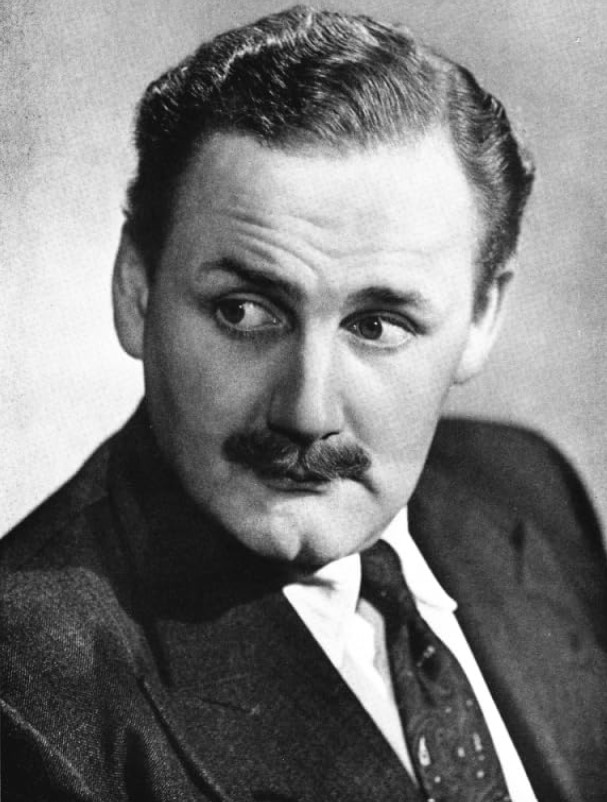
Author and social historian Ron Goulart.
He
had been there nearly three days when, just after sundown, someone knocked on
his door. It was Karen, wearing a light cotton dress, her hair pulled back.
"Are you comfortable, Glenn?"
He
smiled, "Yeah. I like this business now. I've been thinking up new
activities."
Karen
frowned around the room. "Like to come out for a walk?"
"Where?"
"Oh,
along the beach. You can't spend all your life in a damp motel room."
"It's
not damp. That's the fresh sea air you feel." He picked a windbreaker off
the bed and nodded at the door. "So, let's walk." The night was warm,
but heavy with fog. "Sorry I left you up there the other night, Karen. But
you know...."
"Yes.
I know. Cats make you crawly." She took his hand when they reached the
sidewalk and pulled him after her in the direction of the beach. "Have you
really been doing all those annoying things, Glenn?"
"Who
else? You think I've gotten any recruits?" The street was quiet. They left
the last sidewalk and walked down through scrubby brush to the beach. The water
looked blurred as it touched the misty shore. "Just me."
Karen
shivered and stepped away from Wheelan. "You've just made an awful
nuisance of yourself, Glenn. I've always been very fond of you, as I'm sure you
know. But—I'm very sorry."
She
darted in suddenly and pushed hard.
The
surprise and the clump of brush behind him sent Wheelan over into the sand.
When he got to his knees and looked around he caught a brief flicker of Karen's
skirt in the fog. Then she was lost. He stood. He tried to brush himself off,
but his hands had started to shake. And he was beginning to feel odd in the
stomach.
Wind
came in then across the water and scattered some of the mist. He saw the cats.
Dozens
of them, crouched twenty yards away. Their tails were switching and Wheelan
became aware of a puzzling, whirring sound.
Purring.
In
another gust more mist scattered, and Wheelan realized that he was cut off from
the town by a half circle of hundreds of cats. And they were contentedly edging
down across the sand toward him.
Hundreds
of damned cats! They made Wheelan feel so crawly he couldn't move. But if he
didn't move soon the first of the cats would touch him. That thought made him
jump back. The cats moved up.
The
sand was sucking at his shoes; he could feel the chill of the ocean on the back
of his neck. Maybe if he ran straight at them they'd scatter. But he couldn't
do that. They knew that, too. The cats eased a little nearer.
Wheelan
bent and grabbed off his shoes, then his socks. He backed into the cold, wet
sand near the water. He got out of his clothes—all except his shorts; he'd have
to come ashore someplace. The cats were close now. For a moment Wheelan thought
he wouldn't be able to move, but finally he was able to grin and thumb his
nose.
Then
he ran quickly out into the water.
It
was dark and cold, but he was a fair swimmer. He could make it down the coast a
quarter mile or so. Far enough. As he swam, Wheelan made up his mind he'd never
come back to his home town again.
Not
even for Christmas.
END
Louis
Shalako has books and stories available from iTunes.
See
his stuff on ArtPal.
Here’s
a free copy of his new audiobook.
More
on Ron Goulart. (Wiki)
Thank
you for reading, and listening.