|
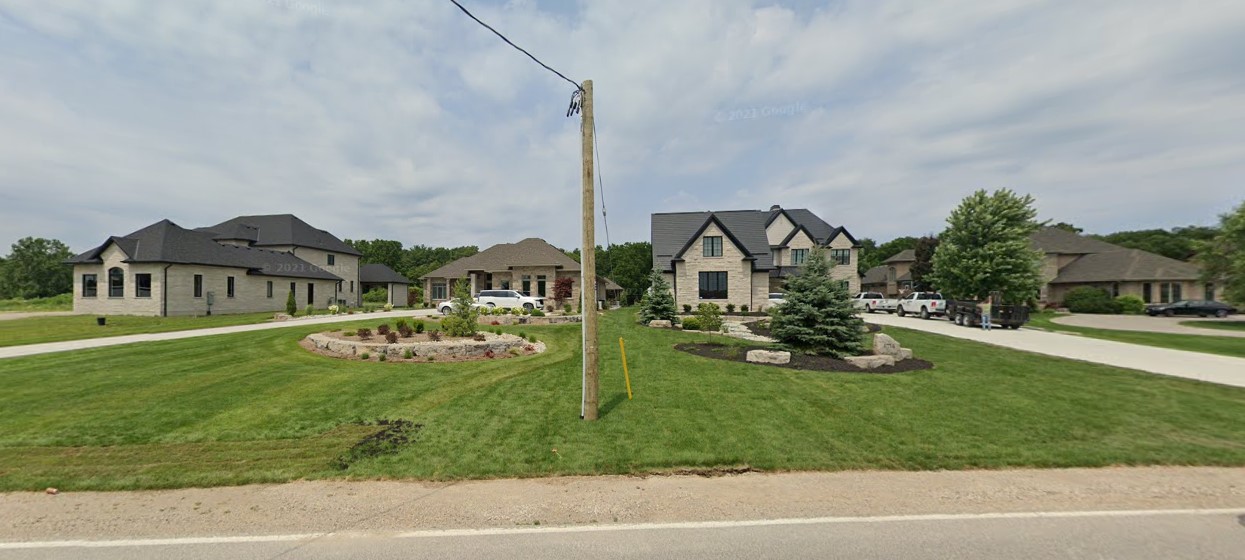
| The balconies take up interior space, but are an option. (Google Street View). |
Louis Shalako
The federal government is in the process of selling
off or otherwise conveying surplus land and buildings in what is stated to be a
stimulus for building more homes faster.
The man in charge
of tens of millions of square feet of federal office space is aiming to double
the government's lumbering pace for off-loading buildings.
Mark Quinlan, assistant deputy minister of real property services at Public Services and Procurement Canada (PSPC), said the department has a "special group" in place to speed up property disposals.
"Historically, the government is not very good at disposing of surplus properties," he told a city building summit organized by the Ottawa Board of Trade Tuesday.
Policies require PSPC to consult with provinces, municipalities, other departments and Indigenous partners before putting a property up for sale. (CBC)
Analysis.
Turning an office building into residential units will require a huge retrofit of plumbing, drains, electrical, and firewall barriers between individual units. There will have to be heating, cooling and ventilation for every unit. Units will require child-safe, screened windows that open, and all of this takes time, labour and capital. It takes vision and financing. It takes zoning, something of a hot topic in the housing debate, and a factor in the success of NIMBYism. The structural addition of balconies, which is desirable enough, adds more time and complexity to any project. Now we are cutting holes in a building’s exterior, sticking in and fastening steel I-beams, forming up the typical concrete pad, adding in a sliding balcony door, adding proper railings and the like. Yet an apartment or condominium unit without a balcony makes it a somewhat harder sell.
Pictured above is the old Polysar corporate headquarters, now housing. We can see the ‘balcony problem’ has been solved at the expense of interior space. Yet it is an option.
In the building I live in, the company redid the balconies some years ago. Once the railings were down, our patio doors were screwed shut, so you could open up about five inches but children and adults could not go out onto the balcony—which, obviously, were a hazard as they had no rails. Old concrete was broken up, and what was left was a series of I-beams sticking out. You don’t just bolt that to brick walls. It has to be tied in properly to the rest of the structure. Any kind of angled truss-type bracing would interfere with the balcony and patio door directly below it, and the balcony above your unit would do the same. It’s not impossible, but it might be unsightly with a heavy frame and angle-brackets down the walls.
Cutting holes in long expanses of load-bearing structures, in order for every unit to have their own door is another consideration. Each doorway would have to be framed in heavy steel, in order to take the load of previously-existing reinforced concrete above. One way around that would be ‘vestibules’, with one (heavily-reinforced) opening from the hallway into a small common area—the vestibule. Entrance to several units would involve openings in the new, concrete-floor-to-concrete-ceiling firewalls. The vestibule would be a common area, and requires cooperation to succeed, or it becomes a hazard, with bicycles, patio furniture, when it really ought to be in storage. This area becomes a little more like a co-op, where tenants are expected to pitch in on common chores—asking folks to help shovel snow off the sidewalks and vacuum the halls is a bit of a tough ask.
However. This saves a few holes cut into load-bearing structures on a common hallway.
Here, the door framing only has to support the load of concrete blocks up to the reinforced concrete ‘deck’ of the floor above, without reference to the weight of the building above.
Baseboard heaters, all would be based on the individual unit, replacing common heat for a large corporate building, with such costs factored into the leases. This implies each unit has its own thermostat, its own electrical and water metering…another complication in the conversion process.
 |
| Reinforced concrete before the pour. |
This is why old schools are not particularly good prospects for conversion, whether single or multi-story, no matter how structurally sound. In a single-story school, with no basement infrastructure, that would require all services to be overhead, in a false ceiling which must carry the water pipes, for example. All of that has to go through fire-rated wall structures. Drainage, requires cutting concrete and digging trenches below frost level…we are beginning to get the picture now.
Theoretically, one classroom, in terms of square footage, would make one small apartment. It is the services that are lacking. Each unit needs a kitchen and a bathroom, with plumbing, drainage, ventilation, all up to modern standards. With only one door, it might need some method of fire escape…
In and of itself, offloading surplus federal lands and buildings is not necessarily a bad thing.
Okay, so we’re offloading lands and buildings for a nominal sale price of $1.00, a building for a dollar, ladies and gentlemen. This is a form of subsidy, and yet most would agree that any form of subsidy is desirable, in our current very tight housing market.
That in no way makes the job of conversion any faster or easier—whether it makes it any cheaper remains to be seen.
This plan may be of great interest in the Ottawa area, Toronto, other large centres. Here in Sarnia, Ontario, there really aren’t too many federal buildings or even federal lands available for conversion or new-build housing. There is the ‘federal building’ downtown, presently housing the Post Office. Service Canada operates on Exmouth Street, this looks like a simple leased space to this observer. The courthouse, whether federal or provincial, could be leased space in a mall somewhere, and only then would the building, right across from the county jail, become surplus.
So let’s say the federal government leases space somewhere suitable and releases the old Post Office to some form of development.
Fair enough, but waterfront property is at a premium. The likeliest outcome would be a proposal for demolition and then the construction of high-end condo or rental/leasing units. This does little to reduce housing costs in the missing middle and the low-end of apartment units. It does nothing in the face of NIMBYism.
It’s also fair to say that the process of disposing of federal assets is likely to be slow and not likely to budge the needle on the housing crisis anytime soon, although it is part of a longer-term solution.
Around here, not much joy, in other words.
Additional: In the major earthquake in Turkey, large numbers of apartment
buildings came down, partly due to the magnitude of the quake, but also due to
lack of proper building and construction inspections. This was exacerbated by
unauthorized, un-permitted building modifications where landlords and
unqualified persons were cutting windows and doors in structural elements, in
order to create more units by subdividing spaces within. This comes from news
sources such as Reuters and others. I really should have included this in my
analysis.
#analysis
END
 |
| #Louis |
Here is the full story from the CBC.
Louis Shalako has books and stories available from Amazon, in ebook,
paperback and one, Speak Softly My Love, in audiobook format.
Thank you for reading, ladies and gentlemen.