Showing posts with label social issues. Show all posts

Monday, September 23, 2024

Bring Out Your Dead: The Black Death and Demographic Decline. Louis Shalako.

Jan van Eyck. Detail from the Crucifixion Dyptich.


Louis Shalako


In the Middle Ages, the Black Death swept the world.

Estimates are that thirty to sixty percent of the population died in Europe, thirty percent or more in the Middle East, in waves, large numbers at a time. Bring out your dead, all very funny in a Monty Python sketch but real enough at the time.

There weren’t enough people left to bury the dead. Rents fell, many demesnes languished empty. There weren’t enough people left to farm the land. There weren’t enough people left to take up vacant lands, which were soon overgrown with weeds and brambles.

Aristocrats and wealthier people had a better chance of survival, better diet perhaps, but also the ability to withdraw to the countryside and go into a kind of lockdown.

Landowners saw their incomes fall, yet many of their own costs remained high, considering numbers of servants and retainers. Their administrators had to be paid, legal affairs in a litigious age were costly.

We can’t really compare this with Covid-19, which might have taken fifteen or twenty million in a global pandemic. This is partly due to all the pandemic-era measures taken by governments around the world, democratic or totalitarian, very strict in the case of New Zealand and fairly loose in the case of Sweden. There are certain countries where the numbers are probably not trustworthy, North Korea or Russia, China for example.

Yet we are in the middle of a labour shortage, here in Canada and in pretty much all developed nations.

This is caused by the aging of the population, this is caused by falling birthrates, again in pretty much all of the developed nations.

Old people just don’t want to work anymore—

This is why the federal government pulled out the stops and accepted a million new Canadians in a recent year. When I was a kid, Canada had a population of about 20 million. Fifty years later, it has barely doubled, and this with the benefit of fairly liberal immigration policies.

***

We simply aren’t making babies fast enough to replace ourselves, let alone grow the population.

It’s not a big die-off, rather it is the result of falling birthrates. At one time, eighty to ninety percent of Canadians lived on the farm or in rural communities. Efficiencies of production now means that it takes fewer hands to produce the same or larger crops. People moved to the cities where the work was available, the wages were higher and opportunities abound.

Typically, Canadians don’t take those back-breaking jobs, labouring in the hot sun and getting paid a few cents a basket for cherries, or tomatoes or whatever, which means we must import even that kind of unskilled labour. New Zealand has a big problem, with 130,000 people leaving last year, mostly for Australia and beyond. Poverty is not the problem, but high costs of housing, food, and all the usual suspects. People think they stand a better chance of prosperity somewhere else.

So far, Canada is not really showing too many signs of that, although the U.S. is a big draw for certain types of professionals. Doctors and nurses come to mind, and then there are the artists, actors and musicians, who might be able to afford living in Canada, but for an actor, Hollywood is where the big money is.

People are living longer and longer, mostly due to good health care, the envy of much of the world. This is one of the attractions of Canadian life.

There are people who honestly believe in ‘replacement theory’. They drive past the bus stop, perhaps the one near the intersection of London and Murphy roads right here in Sarnia, and what do they see? All those beautiful young people, many of them foreign students and people of colour. It reinforces their beliefs, fueled by far-right conspiracy theorists and other folks just trying to force the narrative to conform to their own bigoted views and a kind of not-too-subtle racism.

There is little doubt that governments at the federal and provincial dropped the ball when it came to housing, bearing in mind all that increased demand due to immigration and international students. This is not a statement of my own ideology. Between the federal and provincial and territorial governments across Canada, we have Liberal, Conservative and NDP governments to blame, if blame is our game. I’ve always found the blame game kind of useless. Bearing in mind the lack of concrete and specific suggestions, what good is it? Also, foreign students contribute cash money to our system of higher education.

That little glass slipper will soon be pinching the foot that wears it, and some of those educational programs, some of those opportunities must dry up and blow away without serious increases in funding, perhaps even at Lambton College here in Sarnia.

People think the government doesn’t listen. I think they do listen, which is why I make a point of talking to them once in a while. It’s never done any real harm, and it might have even done some good along the way.

When it comes to foreign students, their money, their very numbers were being exploited to subsidize a system that is chronically underfunded otherwise. We will not escape the consequences.

Just for the record, we elect the governments we deserve, and this holds true at all levels.


END


Louis Shalako, founder of Long Cool One Books, is the author of twenty-four books, available from major online retailers. Louis studied Radio, TV and Journalism at Lambton College, later studying fine art. He began writing for community newspapers and industrial magazines forty years ago. His work has appeared in seven languages.

Louis Shalako has books and stories available fromAmazon.


Thank you for reading.


Background and Facts.


New Zealand. (The Guardian)

France, Pension Reform. (Foreign Policy)

The Black Death. (Wikipedia)

Colleges Affected. (Ottawa Citizen)


Bring Out Your Dead, Monty Python.


Friday, June 7, 2024

Digging Deep. Approvals Are Nothing. Shovels in the Ground Are Everything. Louis Shalako.

This building is under construction at 1550 Venetian Boulevard, Pt. Edward, Ontario.


Louis Shalako


Approvals are Nothing. Shovels in the Ground Are Everything.


Locally, approvals for housing developments of all kinds add up to either 2,400, or even 3,500, depending on who you ask, or maybe just in how we choose to define them. Yet there are very few shovels in the ground. Some of the approvals go back so many years, they have been forgotten.

So, how many affordable, geared-to-income units has the County of Lambton built in the last twelve months? Three, ladies and gentlemen…just three. Habitat for Humanity is doing a better job than that, although mere charity can never be a solution for low-cost housing. It doesn’t even work that well for poverty…

The former Bayside Mall was successfully demolished, and a new building put up for Shared Services and the Ministry of Community and Social Services. Driving by, at some point, one began to wonder at the lack of progress. The Covid-19 pandemic put a hold on a lot of projects. But this one never started up again. No further work has been done, and an announcement has been made that the whole thing is off, whether that is temporary or permanent is a good question. It’s a big, flat area in the middle of downtown, and nothing is happening there.

Affordable, Geared-to-Income Indigenous Housing at 940 Confederation St. has been delayed due to unexpectedly high construction costs. (40 units)

St. Demetrios Church on Murphy Road has hit a roadblock due to funding program changes. (Up to 46  units)

Former Devine St. School to become senior’s housing.(100 units)

An elected official has stated that there was a change in ownership. Whether that means the land or the company have been sold, or whether one or more partners walked away, is unclear.

Former St. Peter’s School to become senior’s housing.(104 units)

Former High Park Church to become affordable housing. (20-23 units)

Housing eyed for former St. Paul’s Church in Sarnia. (Unknown number of units)

Developer has plans for the historic Central United Church. (10-15 accessible units)

Out of the Cold Program to utilize Laurel Lea Church on Exmouth Street. This is a winter-seasonal homeless shelter, with a possible plan for further affordable housing.

So, Kathleen St. has been proposed as the site of some new development for affordable housing. The city owns the land—unfortunately, the county is in charge of social housing, which means that it won’t get built anytime soon, no matter how much fair, impartial and objective news coverage it appears to receive. (50 units)

The city has or is giving away an underused parking lot on Victoria Street, again, the county will be responsible for actually building it. I have a funny feeling that one ain’t going to happen anytime soon. Mayor Mike Bradley, seconded by Councilor Bill Dennis, both members of county council entered a motion challenging Lambton County Social Services to complete any project within eighteen months. This may relate to the council’s response to a request for a study of putting washrooms at Rainbow Park. (See below.)

The county’s project, Maxwell Place, has some serious problems. The project, affordable, geared-to-income housing for vulnerable senior citizens is stalled for the second time. Holes were excavated, foundation work was done. One day all the contractors went home and nothing has been done since. Apparently, the county is looking for a contractor willing and able to complete the project. Which won’t happen as long as litigation is before the courts. Also, people aren’t talking, this is especially true with the possibility or likelihood of litigation before the courts. Another fine mess, whether that has anything to do with the prefab construction methods or what is unknown, however the upper structural modules are said to be in storage locally… (24 units)

So county council, in what appears to be a misinterpretation, refused to put in ‘washrooms’ at the Rainbow Park homeless encampment, when really, portable johns would appear to be desirable as an interim measure. According to Mr. Agar, ‘a city park and a city homeless encampment is a city problem’, I might have had a little more sympathy if the county could actually complete a project of almost any sort, in any sort of time frame, and at almost any sort of cost—

When county council voted pretty much unanimously to fund a five-year study on homelessness and affordable housing shortly after the 2018 election, that was a dead giveaway. And, of course, they can’t do anything until the study is completed, which it was. And it was the most wishy-washy, most waffling sort of document that has been seen in many years around here, with plenty of talk about leveraging synergies and shifting paradigms, and identifying core areas of need, assessing individual requirements and designing one-size-fits-all living spaces, (unless there's something different about you), and partnerships, and stakeholders, and consultations—they can never get enough consultations with stakeholders, ladies and gentlemen. Oddly enough, the only stakeholders not invited are the ones who are actually supposed to live in these places, assuming they ever get one built. In that sense, it’s like the ‘consultations’ undertaken before the legalization of recreational cannabis: the only people who never got to speak were the very people who were supposedly to benefit from said legalization. I may be exaggerating slightly, but I think not—

There are some success stories.

Bayfront is one of a small number of local success stories. It can hardly be described as affordable, even so, it does tend to take the pressure off of other apartments and condominiums in the local area. Presumably, the tenants/lessees aren’t all that interested in home ownership per se, and here, at least on the river side, you have views of the water. Clearly, the tenants can afford to pay the rent.

The Addison is a newly built apartment tower, the property once housed what used to be a grocery store and a department store. It is ‘relatively affordable’, yet no one on disability or welfare could afford even a one-bedroom, even if they had a partner, bearing in mind clients of ODSP lose all or a portion of their ‘shelter portion’, if they attempt to share housing costs. I told the Ministry that this tended to cause homelessness many, many years ago. (They don't care. - ed.) This sort of thing is ‘baked in’ to the legislation. The social workers can’t do much about that, and for governments, Liberal or Conservative, it seems to create some sort of mental block. The result, is that they might study it endlessly, but no one has the guts to take that one big step, which would result in a total, ground-up, nuts and bolts revision of the guidelines. The real problem, is that it costs money, the government is responsible to the taxpayers, and the NIMBYs and nay-sayers are all over the place. They’re down on the riverbank, burning a candle in order to raise awareness of the stigma…etc, etc, etc, and getting some good front-page coverage while doing it.

Looking southeast, London Rd. and Christina St.

The former Sarnia General Hospital Site sat empty and derelict for some years after closure. Homeless people and others were breaking into the site and stealing copper wire, piping, anything that they could turn into a dollar. It was a nightmare for the neighbours, police and the city. The city eventually paid to have it taken down, turned it over to private enterprise, and at least there is semi-detached housing along Elgin Street, and a pair of low-rise towers are presently under construction. They have progressed to the point of brickwork on the exterior, doors and windows are in, one would assume interior finishing work is progressing. What the actual rent scale will be is unknown. The city paid $5.4 million for demolition and the developers paid $1,000.00 for a property estimated at a value of $1.4 million. One hell of an incentive, but maybe that’s what it takes these days.

A development of approximately 154 detached homes is slated for a parcel of land along London Line. A model home appears to have been built. Yet high-end or luxury housing is not going to solve the problem of affordability in this town, this county, or anywhere else in this country. This end of the market really does rely on market forces, rather than any great subsidies from multiple levels of government. This market exists—and the customer can afford to pay the mortgage.

Here’s the County’s own Report Card, in which they give themselves all A’s.

Looking northeast from the same intersection. Churches make bad housing, except for God.

There is a supportive housing thing on London Road. In a recent news story, there were only a small number of at-risk youth in residence. The folks that built it had $1.2 million of their own money to contribute. The money came to some extent from their success with Emergency 401 or something like that.

Here is a proposed combined detached/townhouse development in Petrolia, which seems logical enough as it relies on market conditions and customer demand. It requires some rezoning, which will quickly be granted. This story was published June 6/24. Yet, even if it happens, it does take some time for ‘shovels in the ground’ and the project to come to fruition.

Point Edward Apartment Takes Shape Quickly.

Brush Cleared for Housing in Point Edward.

Former Holmes Foundry Lands Planned for Development.16 Acres in Total.

Poor people study the sports pages. Rich people study the interest rates. The Bank of Canada has just lowered the rate from 5 % to 4.75 %. There are institutional lenders, then there are institutional borrowers. OPM, ‘other people’s money’, a bit of a mantra among entrepreneurs. As my grandfather would have said, don’t bet the farm on it. Very few corporations have a couple of hundred million laying around, just waiting to be thrown at a housing development. This is not like the stock market, where you can make multiple trades a day, totalling in the millions, and perhaps make a quick profit—or a quick loss. There is a time lag. Nothing happens quickly in this industry, and sometimes nothing ever happens at all, even with ‘approvals’. The bigger the project, the longer the time lag. A new development takes time to build, it takes time to sell it out and fill it up, and it takes time to recoup that investment. The real professionals are looking at the ‘split’, how much does it cost to borrow, interest paid, and how long does it take to pay it off—and how long does it take before the development produces a profit for the shareholders. The split is between income and outgo—a word I may have just invented.

When the conditions are right, building and development will begin anew. Until then, not much joy.

Time for analysis. This is where we compare apples, oranges—and green bananas, which as we are all aware, go bad fairly quickly…

First the commonalities. The successful projects were private ventures. Some of the unsuccessful ones were also private ventures. In an assumption, the successful projects had funding secured, arguably, before the pandemic, and before the interest rates started really climbing. Inflation played some role, bearing in mind the Bank of Canada rate was raised from a nominal .25 % up to 5 %, all of which happened in a very short time. However, if you and your bank had signed a contract, and approved your funding at a given rate, the bank will honour that contract unless it is time-limited. Use it or lose it, in other words.

Some, but not all of the unsuccessful projects may not have had their funding secured. They may not have had funding at all, relying on government grants and low or zero-interest loans. Some of those programs were also time-limited. Any government program has only so much funding. It is first come, first served with some of these programs.

Some of the ‘unsuccessful’ projects may not have been the result of serious intention. If you’re trying to interest buyers in your property, the fact that you have perhaps gotten some variance in the zoning or other bylaws, the fact that some pie-in-the-sky project has been approved by a municipal or county council, might carry some weight with potential purchasers.

Some of the even more unsuccessful projects may represent fantasy more than reality. This especially applies to old churches. The congregation may no longer be able to support the costs of such a building, and the mother church may have gone bankrupt.

Yet they hate like hell to see the thing torn down as well. It’s a perfectly good building and a perfectly good cause, right?

In a previous story, I discussed the difficulty of converting the classic 1960s elementary school to housing, and the issues sort of double or triple if the thing is multi-story, for example the old SCITS here in Sarnia, on Wellington Street. Some folks thought it was a no-brainer for affordable housing. Assuming relatively low rents as ‘affordable’ any economic case, not even for profit, just to keep the building going over the longer term, is unsustainable. Affordable rents do not cover the costs of an unaffordable building.

Locally, several of the churches listed above are huge, very old-fashioned structures. They might even be described as beautiful in their own way. Some of them are historic, but only the bats and the chimney swifts really want to live in that big belfry on the end of the building. The rest of the place represents one big, tall, vast space. That space has no supporting structure. To divide that up into floors will require that structure to be put in place. So now, you’re figuring out how to dig foundations deep into the ground. At the very least, you need to get a backhoe into the building…

The writer is not an engineer, what he does do is to ask questions—or maybe just run a few thought experiments. The writer spent much of his life in construction, and structures are not entirely unfamiliar.

Some very nice people are talking about fundraising. At the risk of being rude or insulting, you can’t fund such a project within any sort of time-frame by running bake-sales or charity bingo games.

(Otherwise the Canadian Armed Forces would be doing it. – ed.)

What they are looking for is public funding, or some rather large donations. Yet the government is not unsophisticated when assessing such requests. Neither are the large donors, and not too many people have ten or twelve or more millions laying around, and if they did, you are really going to have to impress them. You are really going to have to make a case, a good case, for that particular building. So far, this has been unsuccessful.

These are the green bananas, going off rather quickly.

There are actually a few shovels in the ground here in Sarnia-Lambton. The skilled trades, the professional contractors, are the only people who can make things happen in the sense of construction and renovation, and they will go where the money is. For the most part, that is private money, paid by professional developers. Any contracting business runs on money. The skilled trades do not work on charity. They have their own homes, families and their own mortgages to feed.


Update: the county has just offered to buy St. Bartholemew Church, which is in the north end of this city. This may be a bit of a revenge ploy on the part of county, as the NIMBYs and naysayers will be freaking out at the thought of poor people moving into the neighbourhood, bringing down property values. This is where that good old stigma rears its very useful head. Essentially, in this scenario the county looks good and the city will be revealed for what it is. This is why they simply must mention mental health and addictions in any news story of poverty, homeless and disability. There will be endless rounds of consultation, site plans, and there is many a slip between the crouch and the leap, as my old sabre instructor used to say...

Also. I mentioned that some of these approvals go back so many years, they have been forgotten. I had forgotten this long-term care development. It doesn't really fit the definition of affordable housing, except that the elderly are people too. This story dates back to May 3, 2021, where the city sold the land for $250,000.00 and the plan is to replace Sumac Lodge. This land is three kilometres from the original site, which is still open. The site had been shut to new admissions, pending health and safety repairs and upgrades. Also, three years have gone by.  Driving by on the way to work, the location of this land is sort of difficult to confirm, although there are open areas in between homes and businesses.


Louis spells councillor with one 'L', my dears.

END


Analysis: Turning Federal Buildings into Affordable Housing. Louis Shalako.


Louis has books and stories available from Google Play in ebook and audiobook formats.

Louis has some art and stuff on Fine Art America.


Note. Louis spells councillor with one letter ‘L’. Other than that, he really is quite all right. – ed.


Thank you for reading, and listening.


Friday, December 15, 2023

My Criminal Memoir, Part Twenty-Three. Armed Robbery and the Potential For Violence. Louis Shalako.

Stan (left), has a plan.


Louis Shalako


Armed robbery and the potential for violence. Fast forward to the early to mid-nineties. McNuggets, who considers himself to be a criminal mastermind, and Buddy Two-Shoes, an equal partner a lot of the time—well. He has some kind of a brainstorm.

It may have been chance, coincidence, a careless remark by a buddy, or a fellow-traveller. He got the idea from somewhere.

They had a friend, one who drove the mail trucks. That friend may have been the sort of person who had a good job, liked to smoke a bit of pot, and when the day came, they might have had a little hit on that good old crack pipe, right. And it’s pretty insidious stuff. Back in the good old days, the vast majority of Canadians received their unemployment cheques my mail. They got their old age pensions, by mail. They got their tax returns, disability pensions, fucking welfare cheques, all sorts of federal and provincial benefits by mail. People paid their bills by mail—we tend to forget that stuff now that it’s all electronic and we live in the 21st century. We pay our bills with a couple of clicks on a mouse these days…

However.

That must have been what got them thinking. This is pretty serious stuff, but what if? What if, we could grab the whole fucking truck, full of sacks of mail, on just the right day, and what if there were hundreds, possibly thousands of cheques in those mailbags.

I mean, it’s a pretty big town right, and cheque day rolls around once a month.

What then?

What then, eh?

One has to wonder how much thought they actually put into this crime. One has to wonder, just what they planned to do next, for surely that is the really crucial part of the operation. What would be the point of grabbing a shit-load of cheques, if you don’t have any sort of a plan, in terms of how you’re going to turn all that paper into cold, hard cash. And you have to do it quick. There’s only so much time to do it. Were they going to go all over Ontario, cashing those stolen cheques?

How?

Your buddy down at the auto leasing place must be getting pretty warm by now himself.

That being said, these guys were known for fraud, stolen credit and debit cards, impersonating a card-holder and making purchases, and they probably did have at least a few ideas I am sure. What if they also, had a friend in the bank, or some other ideas on that score…maybe you could just sell a bunch of cheques to a much larger player. Laundering cash is one thing, cheques are another, and especially a big whack of personal, individual, government cheques.

I never heard much about that, but I wasn’t really hanging around with them all that much at the time. I heard some things at second hand—the fact that they were in jail, for example. Understandably, they didn’t want to talk much about it afterwards, and it’s not all that easy to press for such information…

There are certain questions you just don’t ask.

Like, what in the hell were you thinking—

So, with the cooperation of the driver, an employee of Canada Post, with some knowledge of the inner workings of the postal system, one of them, most likely McNuggets, cooked up some semblance of a plan.

Almost any criminal can be dangerous. These guys were not normally known for violence, but this was a big heist, at least in their own minds. McNuggets was not banned in the U.S., and so he went over the river to a gun shop and got himself an electric stun-gun. Not so much a gun, it more closely resembled an electric cattle prod, although it would absolutely put a man down, rather than just giving a 1200-pound cow a little buzz on the ass…I do recall him showing me, which shows that they must have (or I must have), been coming and going still. He even offered to let my try it, an opportunity which I politely declined. No, thanks—I’ll take your word for it. He smuggled that back over the river. There was some contact, in that they still sold me a bit of pot once in a while, although my cocaine days were either gone or going very, very soon now—

Yeah, what would happen if McNuggets, or Buddy Two-Shoes, or Zoomer, opened up a vehicle looking for a wallet, and found a firearm in there…what then.

Promise you will never tell. Thief's honour...

This is what I mean—sort of, when I say these guys, low-level punks that they were, could also be dangerous, not just to other people but to themselves as well. One thing led to another, in a logical progression of events. And a hot firearm can always be sold, for a little cash, to someone who might be even stupider, or maybe even just crazier, than you are. Selling someone a hot firearm, and they go off and use it somewhere, is that a whole lot different than the person who is just helping out a friend to find a vein, and pressing the plunger on that syringe, in all innocence, which results in the death, not of an enemy, but a friend—what then.

What then? The same holds true for a cheap taser bought in a pawn shop or whatever in a little town across the river, and no plan is completely foolproof.

Anyhow, the basic plan was pretty simple. Their postal driver friend was to pick up a load of mailbags, wherever that might have been. I’m thinking London or Toronto, some postal sorting facility in Mississauga, considering the load, and then bring it back to town, where these guys would be waiting at a certain time, at a certain corner. Their friend would have to stop at the stop sign, and then they’d leap out, pull open the door, climb in…and take him hostage, what with having a taser weapon and all.

A big sack of cheques, right...

They had a story all cooked up for the guy, and all that person had to do was to stick to it. This would be all the more convincing, if they were actually injured, when you think on it.

Now, this guy (or girl, which is barely possible), must have wondered. But they were to go somewhere out in the country. Tie them up, gagged and blindfolded, steal the truck and dump him or her out into the road…

There was no guarantee that they weren’t going to get zapped with that taser. There was no real guarantee of success, there was no real guarantee of the proceeds of the crime being properly distributed, in any sort of equitable manner, and the truth is, they got cold feet.

Where in the fuck are you going to hide a Canada Post truck for any length of time.

These guys were bound to get caught, one way or another. They just didn’t see that.

The reader or listener may be able to guess what happens next. The cops had been tipped off. The boys were waiting, and their friend pulls up to the exact spot, right on schedule.

It must have seemed like they had it made. All the cops had to do was to remain in concealment, all they had to do was to wait, to pounce, and to catch them red-handed.

Which is exactly what they did.

It’s a funny thing about McNuggets, who had his pride. He was never caught in the commission of a crime. No, ladies and gentlemen, he was always betrayed. He was always ratted off by a friend.

This is one of the things that made him dangerous. He couldn’t accept that he had simply bitten off more than he could chew.

He didn’t take into account that that other guy had a wife, a kid, a home, and a good job, and he’d just been talking in his cups, as the saying goes. That other guy wasn’t prepared to do hard time for him, in spite of the criminal code of honour, or whatever ludicrous ethical and values system one subscribed to—

It never occurred to him that the other guy had no reason to trust either one of them, or that they wouldn’t, in fact, taser him, take all the money, and if he didn’t like it, he could go fuck himself.

What’s he going to do now? Call the cops and confess to a federal crime?

Enough to put a man down...

Interestingly, McNuggets was the only guy I ever heard of who waived bail. That might have been smart, start early on your sentence and just get it over with. He’s the only guy I know that entered a plea and headed off to the penitentiary, where at least they had a library, recreation facilities, and the opportunity to learn some kind of a trade…poor old Buddy Two-Shoes, in a separate trial, didn’t stand much of a chance once his accomplice had copped a plea. McNuggets did four years and Buddy, two and a half, one must assume he made some kind of a statement of fact. McNuggets was the only guy I know, who literally showed me a set of lock-picks. McNuggets was the only guy I know who bought some kind of plastic card-printer or embosser, paying a couple of grand for that off of Ebay. What was he thinking of? And McNuggets, as you may recall, had that grow-op in his basement, which he showed to anybody who came by the house, but only after swearing them to an oath of secrecy…McNuggets waived parole.

When he was out, he was out. He didn’t owe anybody anything. There were no conditions, once he’d served his sentence and allegedly, paid his debt to society.

As for Two-Shoes. Maybe he caught the benefit of the fact that his buddy had a worse, or maybe even just a longer, record. A record as long as your arm—how often have we heard the expression?

Hell, maybe McNuggets just had longer arms.

He told me an interesting story. When he was really young, and fearless, he’d broken into a home. He’d hit the jackpot—he’s found a stash of weapons. Jamming them all into a pillowcase, having read a book or two on burglars, safe-crackers and the like, he got the hell out of there.

It didn’t take too long before he realized he couldn’t take them home. He said he’d taken them ‘out in the woods’ and buried them. When he went back some time later, he did find them, but they were all rusty and he still didn’t really know what to do with them. One wonders what to make of a story like that, or what eventually happened to those weapons.

This might also account for some of that paranoia, when I was talking about writing about small town criminals.

As for Zoomer, there was a story where a couple of cops grabbed him off the street one day. They did not take him downtown. They took him to some empty apartment in the south end of town and tied him up in a chair…they beat the living fuck out of good old Zoomer, and considering the person, one wonders what exactly they hoped to achieve.

You’re not likely to reform a guy like that.

The story goes, that he had stolen a cop’s hat out of a vehicle.

A fucking hat, really?

So, there is such a thing as honour, there is such a thing as humiliation, wounded pride and the like.

One wonders if there was also a weapon, a handgun, of official issue or otherwise, and whether such a weapon had ever been recovered.

Pure speculation on my part, but it is what it is, ladies and gentlemen.

God knows there’s enough weapons out there.

Looks like he scored.

***

It has been said that the average person can unknowingly walk past 36 murderers in their lifetime. Think about the stranger who you brushed shoulders with on the bus, the person standing in front of you in line to grab a coffee or the passenger who sat down next to you on a plane. – New York Post.


END


Poor old Louis Shalako has books and stories available from iTunes.

See his art on Fine Art America.

Check out One Million Words of Crap, an audio essay on independent, digital publishing, in celebration of fourteen years here at Long Cool One Books.


My Criminal Memoir. (Part One).

My Criminal Memoir, Part Two.

My Criminal Memoir, Part Three.

My Criminal Memoir, Part Four.

My Criminal Memoir, Part Five.

My Criminal Memoir, Part Six.

My Criminal Memoir, Part Seven.

My Criminal Memoir, Part Eight.

My Criminal Memoir, Part Nine.

My Criminal Memoir, Part Ten.

My Criminal Memoir, Part Eleven.

My Criminal Memoir, Part Twelve. (Access restricted due to content. 18+)

My Criminal Memoir, Part Thirteen.

My Criminal Memoir, Part Fourteen.

My Criminal Memoir, Part Fifteen.

My Criminal Memoir, Part Sixteen.

My Criminal Memoir, Part Seventeen.

My Criminal Memoir, Part Eighteen.

My Criminal Memoir, Part Nineteen. 

My Criminal Memoir, Part Twenty.

My Criminal Memoir, Part Twenty-One

My Criminal Memoir, Part Twenty-Two.


Thank you for reading, and listening.


Wednesday, December 6, 2023

My Criminal Memoir, Part Eighteen. Those Little Insecurities. Louis Shalako.

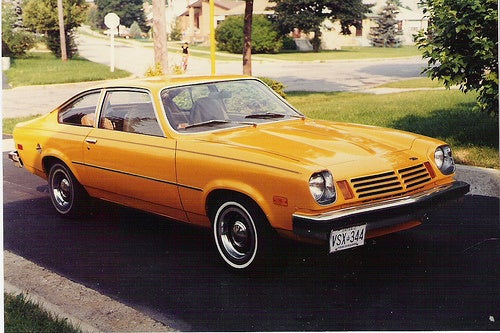
The car for hairy-chested he-men.


Louis Shalako


Insecurity. When I was eighteen years old, I was working at Fibreglas Canada. It was in Chemical Valley, a union shop, and my old man, the epitome of fiscal restraint, had co-signed a loan for me at the Polysar Employees Credit Union.

This is how I knew he was proud of me—finally. For however long that might last, and it probably wasn’t all that long, looking back…

The loan was for fifteen hundred dollars, to be paid off at the rate of $75.00 per month over two years.

This is how I got the 1971 MGB which plays such a prominent role in this memoir.

Willy was the most insecure person I ever met, although Stoney might have run a close second with the whole James Bond-slash-Casanova ethos going on there. Some of the real criminals had somehow accepted themselves, which was interesting—the whole lifestyle had become natural to them and they didn’t worry what anyone thought of them anymore.

Poor old Willy had real bad acne as a teenager. He wasn’t real big, he was not an athlete, he wore thick glasses from an early age. The thick and frizzy red hair, parted on the side and piled up on top, swept over in a big slanting wave, did nothing to help. His nickname in elementary school was Fungi, a name he hated and which would provoke a fistfight every time it was used…it was one he could not just let slide, and so the real bullies, who are basically just cowards that are bigger than their victims, knew after a while that they could always provoke him to a fight, a fight which they would almost surely win—especially when there were two or three of them.

Which he surely should have known, but that part didn’t seem to matter.

A more confident person might have been able to control that, or to get over it, but Willy couldn’t.

As a friend, we learn where all the buttons are, and avoiding those buttons becomes second nature after a while. We got along fine—what with all the model rockets, and airplanes, and cars and sailboats and kayaks and stuff. We had our common interests.

When I bought the MG, Willy was still driving his parents’ Chevy station wagon. He’d cracked up their 1973 model. This is how they ended up with a later model of the exact same car…

He and Johnny had borrowed the thing out of the driveway. His mother didn’t drive, his dad was out on the Imperial Sarnia, a small oil tanker plying the lakes for many years, where he was the pump master. He’d be gone for weeks at a time, even when he was home, he was still pump master, so it was a quick visit, one where the man still had to do 12-hour shifts down at the Imperial Oil docks along the St. Clair River. His mother would take a cab to bingo, where she would be until at least ten or ten-thirty p.m.

Willy was showing off, and doing a burnout just down the street and around the corner, he ended up going onto someone’s lawn and smashing into the front porch, there the car hung up and there was just no getting away. Johnny ran home, at first I thought he was joking, but no. No, it was true—

His mother never believed that I was basically just sitting in their living room, watching colour television and cable TV, which we did not have at home at the time. It was probably easier to blame me. Right?

Yes, for two hundred dollars, Willy had bought a motorcycle. It was basically just a power unit, a frame, and all the bits and pieces, wheels, forks, handlebars, clutch and transmission, a handful of cables, from the shop teacher at the old Central Public High School. This was located on East Street back in the day—coincidentally, just across the street from Germain Park and well within walking distance for pretty much all of us.

Hell, even I went there for a while. About three weeks as I recall.

Willy wasn’t stupid, far from it. He put that thing back together, he had it running, and he got his motorcycle license before very long.

Built from parts, all in black.

He was so fucking proud of that thing, he somehow got it over to our house on Christmas Eve, this with ice and snow on the roads. He admitted he’d gone down once or twice, but oh, well, eh.

It was a two-stroke engine. It was a Kawasaki 500 triple, which may have been a marvel of power and efficiency at one time, but he was too impatient to prove himself, to ever bother with properly breaking in the newly-rebuilt engine. With predictable results, in the sense that the rings weren’t properly run in and it puffed a blue, oily smoke that really was excessive.

Willy couldn’t help himself. When he came over to my place, he’d turn from Russell Street onto Bright St, eastbound. He’d pop wheelies—seriously, winding her out for two blocks, jamming on the brakes as late as possible. He’d sit there at the intersection of Bright and East Street, blipping the throttle like it was the World Championship or something and the start flag is all set to drop…

When the road was clear, he’d pop the clutch, do another two or three wheelies, blapping out big clouds of blue smoke all the way, and then do a full-acceleration run, on the 400-block of Bright Street, before jamming on the brakes and pulling up into our driveway.

It was the same thing when he left…here’s this guy, revving the piss out of this horrible old black motorcycle, which was the biggest thing in the world to him. He’s doing a big burnout and popping the front wheel off the ground with every shift, certainly in the lower gears. And the fucking neighbours hated him—and by extension, they weren’t too fond of me either, but no one could control that guy. No one ever talked any real sense into a guy like that, and Willy was no exception.

***

Bob had bought himself a Triumph TR-6, I had the MGB. Willy’s parents finally agreed to co-sign a loan, only two conditions: he had to keep a job, (any job), and it had to be from General Motors and the local dealership.

Willy ended up with a Chevy Vega, which on the face of it, had an overhead cam engine, an aluminum block, and 140 cubic inches. He ended up working at an auto body shop in Petrolia, which sort of justified the need for a car, right.

We were talking cars one day, and he asked why I had bought the MGB. I told him I liked the styling. When you looked out over the hood, you saw the gently rounded hood, the tops of the rounded fenders…the view is very similar to the TR-6, or a Spitfire, or a GT-6, a Fiat Spyder, or any number of cars from the era. My mistake was to tell him it was a like a beautiful woman, and from that point on, the MG was a ‘girl’s car’, but really, it was just a little more civilized than the rather flat-planed TR-6, (which I also liked), and if truth be told, the Vega had all the same styling influences. The Vega had all those same soft curves and fairly good proportions for a small car…none of that mattered to good old Willy. I learned to take it all with a grain of salt with that man.

I had my little girlie car and he had his big, hairy-chested Vega…right.

When I went looking for cars, there were no TR-6s to be had. Also, Bob paid a lot more to get a 1974, he paid $2,995.00 from a car lot somewhere. The TR-6 was narrow, noisy, leaky, and built on a frame. When you went over railroad tracks or hit a bumpy corner, the car would flex, the doors and hood and trunk would rattle, whereas the MGB had a unitized body, a monocoque with small sub-frames, but it was a much stiffer and much more liveable vehicle.

None of this meant anything to Willy, my best friend for many years.

He was the one with the world’s second largest inferiority complex, after all, he was the one with all the little insecurities, sexual or otherwise.

Where one person, such as myself, might be a bit shy around girls and women, guys like Willy took it way the hell in the other direction, thinking that being a lecher was somehow proof of their masculinity.

Fuck, Willy, everybody likes sex—it’s not like you invented it.

In that sense, he had a touch of that same vanity that obviously plagued Stoney, in the dark hours of the night, when surely even he must have had the occasional moment of introspection. He was wildly overcompensating for something. Both of them, really.

More than anything, Willy craved a kind of attention.

***

Bob got himself a pretty nice car, his was in British Racing Green.

In some old documentary, it was said that a well-trained pilot in an inferior aircraft could beat a badly-trained pilot in a superior aircraft. That’s true enough in aerial combat, with the Japanese naval pilots of WW II arriving at the front with less than a third of the hours of training of those who had attacked at Pearl Harbour. While the Japanese Zero was initially superior to the Grumman Wildcat, U.S. pilots were getting hundreds of hours of training. They had learned superior tactics, their planes at least had armour plating and self-sealing fuel tanks. The analogy only goes so far: there were also a hell of a lot more of them.

It is also true that in Formula One and other racing series, drivers have won races in cars that really shouldn’t have won. There was some attrition in the front rows. Some other cars were badly set up, and someone at the rear of the pack had gotten everything just right, including proper pit strategy and a few lucky breaks along the way.

But for Willy, it was not the machine—it was the man, and of course he was referring to himself when he said that. At some point, this is the guy who’s in an Austin Mini, which he’s built up with bolt-on parts to produce a little more power, he’s chasing and trying to pass a BMW M-1, north of Oakville on Appleby Line. Sure, you can catch up on the corners, but then that other driver clearly isn’t an idiot, and it’s not worth stuffing an exotic sports car into a ravine just to impress some young guy in a clapped-out Mini. In spite of the roll cage, reclining bucket seats and four of the Mean Mother headlights across the front…it’s still a piece of shit, Willy.

Yes, Willy was the man, the better man, racing his scruffy Kawasaki 500-triple through a new subdivision, right here in Sarnia, trying to pass his buddy Rick on the inside of a turn, for surely Willy had the guts to beat a brand-new Suzuki GS-1100.  For after all, it is the man that counts…not the machine. There was a real streak of jealousy in that guy, but when he hit a patch of sand and gravel, slid into a fire hydrant and ended up with three steel pins in his ankle, even then I doubt if the man ever really learned anything from it…

All that blue smoke coming out of the engine must have blinded him to the truth. All that vanity got in the way of having a smidgeon of common sense.

***

A few years have gone by. My old man and I are sitting on the front porch, and there’s a familiar roar down at the end of the street…

It’s Willy, in that fucking Mini of his.

Uh, oh, says my old man…here comes Mad Dog.

I had to laugh.

It was a good name for him, and of course he loved it.

Sure enough, he’s racing up through the first two or three gears…approaching the house…cranking the steering wheel to the left, he pulls real hard on the handbrake, the car spins, now going backwards, and it slides to a stop at the curb, in front of our house, and just tucked in behind my old man’s latest Volvo, a 1980 sedan with all the options, including overdrive, a sunroof, leather seats.

Of course the fucking neighbours hated Willy.

What a fucking nut-case.

***

...still trying to outrun Mad Dog Willy somewheres...

Please don’t think I don’t have a few insecurities of my own, because I have, and I did, and I probably still do.

I struggled for years, and I also failed for many years. I failed to even try, for some years. We beat ourselves up for an awful lot of shit, ladies and gentlemen, and while some of what happens to us is within our control, there’s a few things we can’t control, and of course our attitude, towards ourselves, is extremely important. I say that, without being able to explain just exactly how that works, but trust me—it does. It does.

The way we talk to ourselves is pretty important to our overall well-being, and I suppose, in some way, it will be reflected in our results.

One has to wonder just what exactly was going on in people’s heads, sometimes.

So. How did Mad Dog Willy drive that 1974 Chevy Vega?

How do you think he drove it—

And I promise not to bore you to death.


END


Louis Shalako has books and stories available from Google Play. He’s always got something up for free, for example The Handbag’s Tale, the original short story that inspired The Inspector Gilles Maintenon Mystery Series.

See his art on ArtPal.

Grab yourself a free copy of One Million Words of Crap, available from Google Play.


My Criminal Memoir. (Part One).

My Criminal Memoir, Part Two.

My Criminal Memoir, Part Three.

My Criminal Memoir, Part Four.

My Criminal Memoir, Part Five.

My Criminal Memoir, Part Six.

My Criminal Memoir, Part Seven.

My Criminal Memoir, Part Eight.

My Criminal Memoir, Part Nine.

My Criminal Memoir, Part Ten.

My Criminal Memoir, Part Eleven.

My Criminal Memoir, Part Twelve. (Access restricted due to content. 18+)

My Criminal Memoir, Part Thirteen.

My Criminal Memoir, Part Fourteen.

My Criminal Memoir, Part Fifteen.

My Criminal Memoir, Part Sixteen.

My Criminal Memoir, Part Seventeen.


Thank you for reading, and listening.